
South African Flags Guide: Symbols, History & Meaning 2026

Why do south african flags ignite such pride, spark debates, and draw curiosity in 2026? These bold symbols are more than just colourful fabric—they carry the weight of history, conflict, and hope.
In this guide, we explore the fascinating journey of south african flags, uncovering the powerful symbols and deep meanings they represent. From colonial banners to the modern flag, each version tells a unique story.
Discover how these flags evolved through political change, design innovation, and cultural impact. Ready to decode the secrets behind south african flags? Join us on this journey to understand what makes them truly unforgettable.
The Evolution of South African Flags: A Historical Timeline
South African flags have undergone remarkable changes that mirror the country’s complex history. Each era brought a new design, reflecting shifting powers, cultures, and identities. By tracing the development of south african flags from colonial times to the present, we gain insight into the nation’s journey and the deep meanings each flag holds.
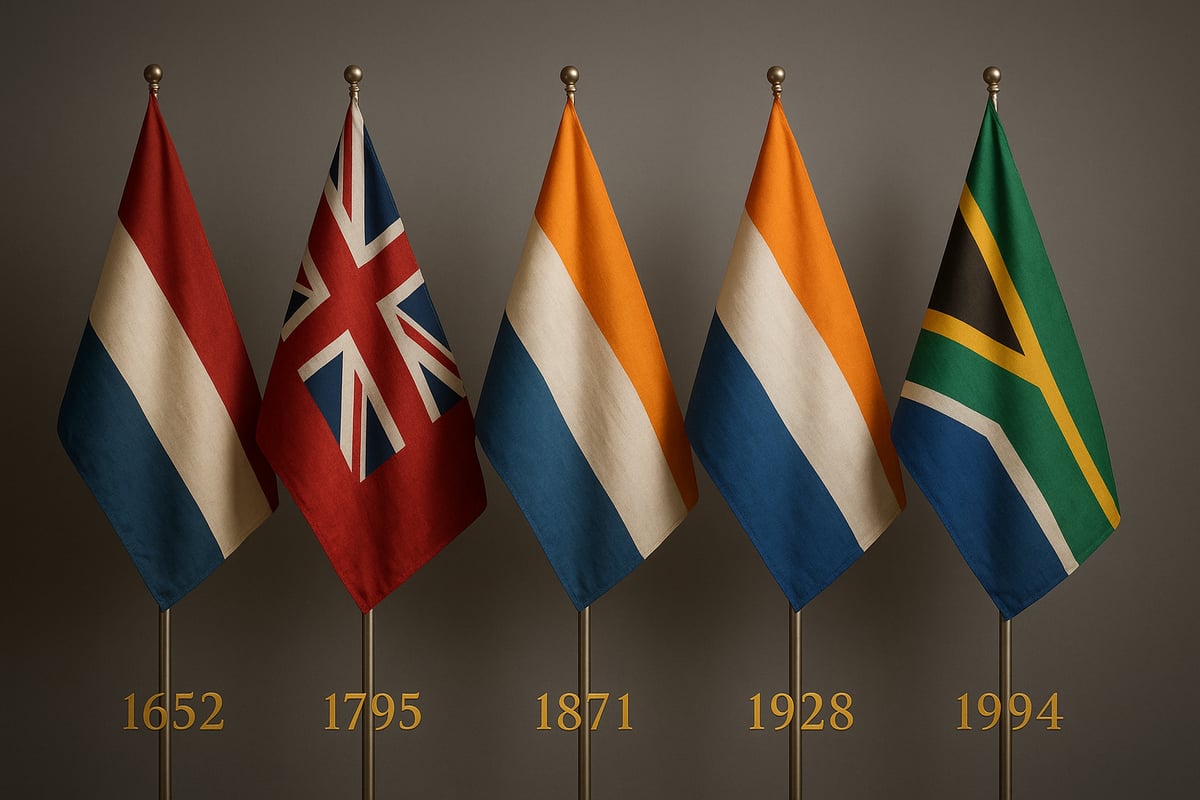
Early Colonial and Pre-Union Flags
The story of south african flags begins in the 17th century with the arrival of the Dutch East India Company (VOC). The VOC flag, red, white, and blue with the company monogram, symbolised European trade ambitions and colonial control. Later, as the British took over, the Union Jack became the dominant flag, used in government buildings and military posts across the Cape Colony.
In the 19th century, the rise of independent Boer republics introduced new symbols. The Zuid Afrikaanse Republiek adopted the “Vierkleur” with green, red, white, and blue stripes, representing Boer aspirations and resistance. The Orange Free State flag, with its orange and white bands, reinforced a distinct identity.
During the Anglo Boer Wars (1899 to 1902), flags became markers of conflict and allegiance. British forces relied on the Union Jack, while Boer fighters raised their republic banners. After the wars, the Red and Blue Ensigns, bearing the Union Jack and South African coat of arms, were used from 1910 to 1928, but confusion persisted. Many South Africans debated which flag truly represented them, especially during World War I.
A quick reference timeline:
| Year | Flag | Symbolism |
|---|---|---|
| 1652-1795 | Dutch VOC | Colonial trade, Dutch influence |
| 1795-1910 | British Union Jack | British rule, imperial identity |
| 1857-1902 | Boer Republic Flags | Independence, Afrikaner heritage |
| 1910-1928 | Red and Blue Ensigns | Compromise, dominion status |
Through these changes, south african flags signalled ongoing struggles over identity and belonging.
The Union Flag (Oranje Blanje Blou): 1928–1994
The adoption of the Union Flag in 1928 marked a turning point for south african flags. Known as the Oranje Blanje Blou (orange, white, blue), it was chosen after lengthy debate to symbolise unity between British and Afrikaner communities. Its tricolour design was based on the Dutch Prince’s Flag, with three inset flags at the centre: the Union Jack, the Orange Free State, and the Transvaal Vierkleur.
These elements reflected South Africa’s colonial legacy and its attempt to forge a shared identity. However, the presence of the Union Jack within the design, nicknamed the “Blood Stain,” sparked controversy. Many Afrikaners objected, seeing it as a reminder of British dominance and the trauma of past wars. The National Party, which eventually introduced apartheid, made several attempts to replace the flag, but none succeeded.
Over the decades, the flag became closely associated with both the union period and the apartheid regime. For some, it was a symbol of unity and independence from Britain. For others, it came to represent exclusion and segregation. This dual legacy made the flag a subject of intense debate, especially as the country moved toward democracy.
The complexity and controversy of this era are explored in more detail in the History of South Africa's National Flag, providing invaluable context for understanding the evolution of south african flags.
The Modern South African Flag: 1994–Present
By the early 1990s, it was clear that a new chapter for south african flags was needed. The end of apartheid and the birth of democracy demanded a symbol that could unite a diverse nation. The new flag, designed by Frederick Brownell, emerged after a rapid design process in 1994. Its bold “Y” shape, vibrant colours, and inclusive symbolism captured the hopes of a new South Africa.
Originally intended as an interim solution, the flag was officially adopted on 27 April 1994, the day of South Africa’s first democratic elections. The public embraced it immediately, and global recognition soon followed. The design’s red, blue, green, yellow, black, and white colours drew from the country’s history, representing unity in diversity and a shared future.
The modern flag quickly appeared in stadiums, schools, and international events, becoming a proud emblem of reconciliation and nation building. Today, south african flags continue to inspire, reminding people of both the challenges overcome and the promise of a united nation.
Decoding the Symbols: What South African Flags Represent
South african flags have long been more than just colourful pieces of fabric. Each element, from the bold colours to the unique shapes, carries layers of meaning that reflect the country’s complex past and hopeful future. Understanding these symbols allows us to see how a flag can unite, divide, and inspire a nation.
Colours and Their Meanings
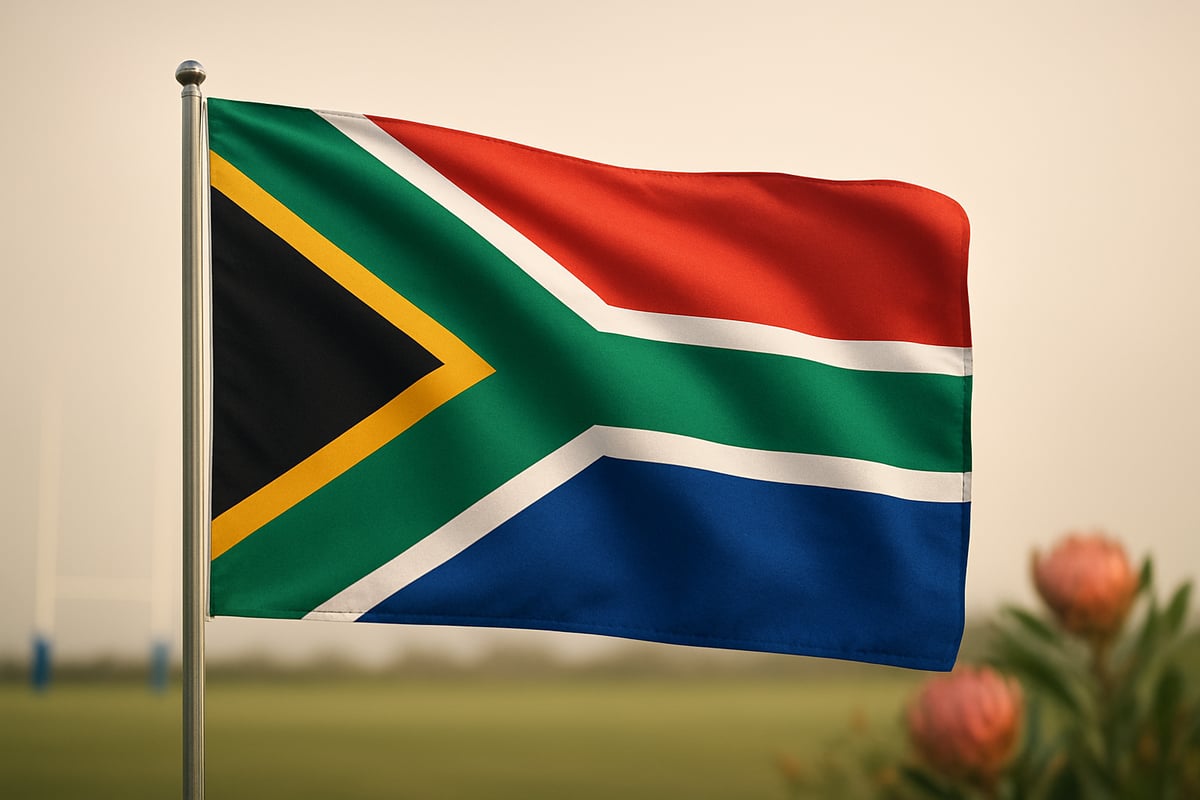
The colours of south african flags are rich in historical and cultural significance. They draw from the country’s Dutch, British, Boer republic, and African National Congress influences. Each shade is carefully chosen, though interpretations have evolved over time.
Here is a summary of the most widely accepted meanings:
| Colour | Symbolism |
|---|---|
| Red | Sacrifice, struggle for freedom |
| Blue | Sky, perseverance |
| Green | Fertility, land, hope |
| Yellow | Natural resources, especially gold |
| Black | The people of South Africa |
| White | Peace, harmony, European heritage |
The distinctive "Y" shape at the centre of the modern flag symbolises the convergence of diverse elements within South African society. It represents the coming together of different paths, moving forward as one nation. Inset flags in the Oranje Blanje Blou (1928–1994) reflected earlier attempts at unity by displaying British and Boer symbols side by side.
There are common myths that the colours of south african flags were chosen without meaning. While designer Frederick Brownell intentionally left interpretations open to foster inclusivity, public sentiment quickly attached deep significance to each element. For an official explanation of the symbolism and flag protocol, you can refer to the Official South African Flag Guidelines.
Cultural and Political Significance
South african flags have always reflected the country’s evolving identity. The old flag, with its inset symbols, was both a sign of political compromise and a reminder of the divisions of the past. It was present at national ceremonies and sporting events, yet became a symbol of exclusion for many.
Today, the modern flag has become a powerful sign of unity. It is seen at national celebrations, on rugby and cricket jerseys, and even in protest marches. The flag’s bright colours and bold design signal hope, reconciliation, and the promise of a shared future.
Controversy still surrounds the old flag, which is now restricted by law due to its association with apartheid. Meanwhile, the current flag is embraced by South Africans of all backgrounds, both at home and in the diaspora. Abroad, it is a source of pride and a way for expatriates to maintain a connection to their heritage.
Ultimately, south african flags serve as living symbols, constantly reinterpreted as the nation grows and changes. Whether displayed in schools, at sporting events, or on everyday items, the flag continues to inspire conversation and reflection about what it means to be South African.
Flags in South African Society: Identity, Controversy & Legacy
South African flags have long been more than just pieces of fabric. They stir strong feelings of pride, memory, and debate, acting as mirrors of the country's complex journey. In everyday life, these flags are seen everywhere, from sporting stadiums to diaspora communities, and their symbolism is deeply woven into the identity of South Africans both at home and abroad.
Flags as Political and Social Symbols
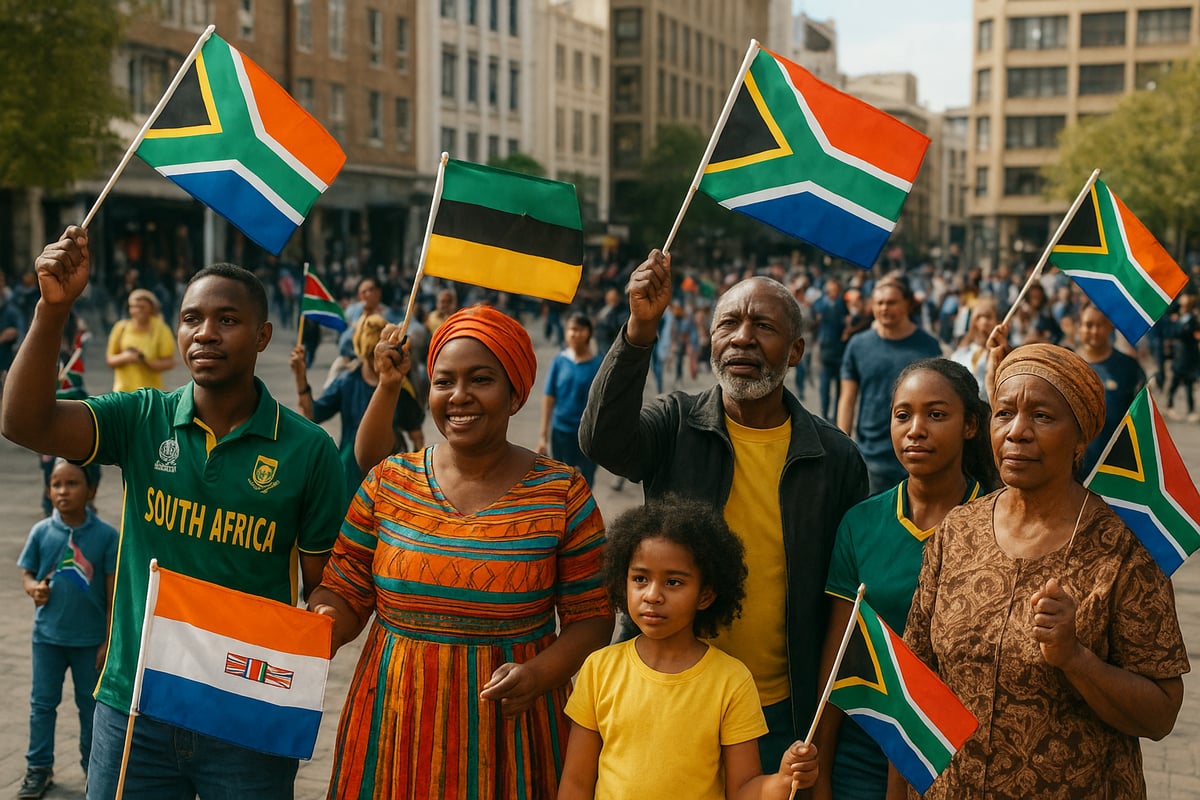
Throughout history, south african flags have been powerful political and social symbols. The Oranje Blanje Blou (OBB) flag, adopted in 1928, aimed to unite British and Boer heritages. However, over time, it became deeply associated with the apartheid regime. For some, the OBB symbolised unity. For others, it became a reminder of oppression and exclusion.
After 1994, the introduction of the new flag marked a turning point. Designed to represent hope, reconciliation, and a shared future, it quickly became a unifying symbol for the nation. Today, the modern flag is displayed at sporting events, public holidays, and during protests, reflecting the ongoing evolution of south african flags in public life.
The meaning of these flags can vary widely depending on the community. While many South Africans embrace the new flag as a sign of pride, others still debate the legacy of previous banners. In the diaspora, especially in countries like New Zealand and Australia, south african flags help immigrants maintain a sense of identity and belonging. These symbols often appear at community gatherings, sports matches, and even on items such as favourite South African mugs, keeping cultural connections alive.
Internationally, south african flags are recognised for their bold colours and unique design. At global events, they spark curiosity and serve as reminders of the country's ongoing journey toward unity and justice. The controversy surrounding the old flag remains significant, with detailed history and debate found in resources like Controversies Surrounding the Old South African Flag.
Legal and Ethical Dimensions
The display and use of south african flags are governed by strict legal and ethical guidelines. The 1994 adoption of the new flag brought with it formal protocols for public display, showing respect for national symbols. In schools, government buildings, and the military, these rules are followed closely to maintain dignity and honour.
Legal debates reached a peak in 2019 when South Africa’s Equality Court ruled that public displays of the old flag, except for academic or artistic purposes, constitute hate speech. This landmark decision aimed to promote reconciliation and prevent the glorification of apartheid-era symbols. For many, this ruling confirmed the importance of using south african flags to foster unity rather than division.
Ethically, flags play a crucial role in how South Africans remember and process their history. The new flag stands for hope, inclusion, and a future built on equality, while the old flag serves as a reminder of past injustices. Educational initiatives continue to teach the next generation about the significance of these symbols, ensuring the legacy of south african flags remains relevant.
In summary, the journey of south african flags reflects the nation's struggle, resilience, and ongoing search for identity. Their meaning continues to evolve, shaping both collective memory and the vision for a more united future.
The Art and Science of South African Flag Design
Designing south african flags is both an art and a science, shaped by centuries of history, cultural complexity, and the pursuit of unity. Every element, from colour to shape, is chosen with intention to represent the nation's diverse identity.
Vexillology: Principles and Influences
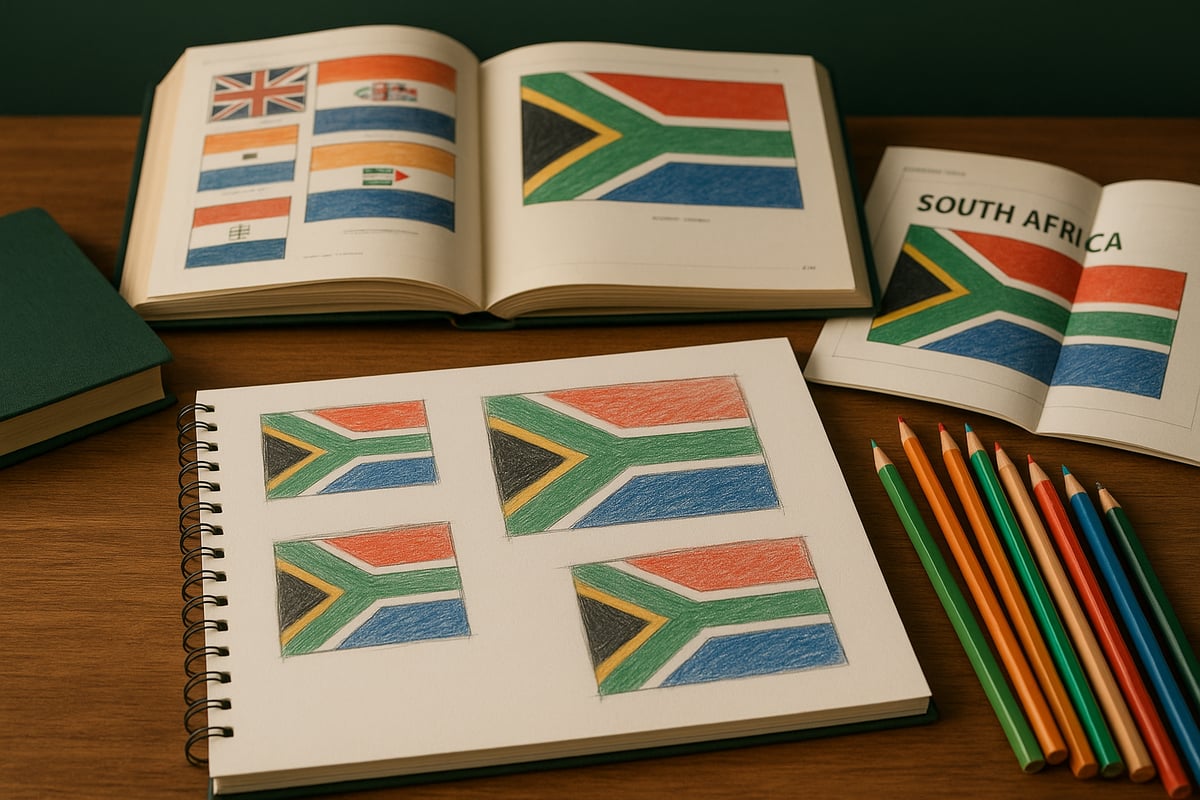
Vexillology, the study of flags, sets out clear principles that guide the creation of successful south african flags. Simplicity is crucial, ensuring the flag is instantly recognisable and easy to reproduce. Symbolism gives depth, with each colour, line, and shape reflecting the nation's journey.
South african flags draw inspiration from other countries. The bold colours of New Zealand and Australia, and the striking simplicity of Canada’s maple leaf, have influenced modern flag design. Designers consider global trends but adapt them to reflect uniquely South African stories.
Key principles include:
- Simplicity: Easy to draw and identify at a distance.
- Meaningful symbolism: Each element must resonate with the population.
- Distinctiveness: The flag should stand out from others, especially in international contexts.
In South Africa, public competitions for new flag designs have been common, especially during periods of political change. Many proposals were not adopted, reflecting the challenge of representing a nation’s complexity. Unused designs often sparked public debate, demonstrating how deeply people care about the meaning behind their flags.
Heraldry also plays a role in the design of south african flags, with traditional shields, colours, and emblems providing a link to both colonial and indigenous identities.
The Designer’s Perspective: Frederick Brownell
Frederick Brownell’s vision was central to the creation of the current south african flags. As the official State Herald, Brownell faced a daunting task: to design a flag that would unite a country emerging from decades of division. He had to balance historical influences with a modern sense of inclusivity.
Brownell’s process was rapid yet meticulous. Working under immense pressure in early 1994, he developed the final flag within a week. He drew on a palette representing the nation's many peoples: red, blue, green, yellow, black, and white. The “Y” shape symbolises convergence and moving forward together.
Last-minute approval came just days before the historic 1994 elections. Both Nelson Mandela and FW de Klerk embraced the design, recognising its potential as a symbol of unity. The public quickly adopted the flag, embracing its fresh look and hopeful message.
Brownell’s contribution is still celebrated today. For more on his pivotal role, see the Minister Reaffirms Frederick Brownell as Flag Designer. His work reminds us that south african flags are more than fabric, they are living emblems of reconciliation and aspiration.
The thoughtful creation of south african flags continues to inspire pride and reflection, proving that flag design is both a creative and deeply meaningful pursuit.
South African Flags in Everyday Life: From Ceremonies to Commerce
South african flags are more than national emblems. They are woven into the fabric of daily life, connecting people across generations and continents. From formal ceremonies to everyday expressions of pride, these flags hold deep meaning for South Africans everywhere.
Flag Protocol and Etiquette
Displaying south african flags correctly is a sign of respect for the nation. Official protocol sets out clear rules. The flag should never touch the ground, be used as a tablecloth, or be draped over vehicles, except during official ceremonies. Schools, government buildings, and the military all follow strict guidelines for raising and lowering the flag.
Common mistakes include flying the flag upside down, letting it become tattered, or using faded colours. These errors can send unintended messages or even cause offence. During national celebrations, such as Freedom Day and sporting events, the flag is everywhere, from banners in stadiums to painted faces in the crowd.
South african flags also appear in art, music, and fashion, symbolising unity and resilience. Iconic moments, like the Rugby World Cup victory in 1995, showed the power of the flag to unite the country. The flag’s presence in everyday life reinforces its role as a living symbol of hope and pride.
Flags and the South African Diaspora
For South Africans living abroad, south african flags are powerful reminders of home. They are displayed during community events, festivals, and even barbecues, helping expatriates maintain a sense of identity. In countries like New Zealand and Australia, the flag brings together people from different backgrounds, fostering a shared heritage.
Many choose to decorate their homes or wear clothing featuring the flag. South African gifts and memorabilia often include flag-themed items, allowing people to celebrate their roots and share their culture with others. The flag is also seen at international sporting events, where it rallies support and creates a sense of belonging.
By embracing south african flags in daily routines, both at home and abroad, communities strengthen their connection to the nation’s story. The flag’s enduring presence in commerce, ceremonies, and personal life reflects the pride and unity that define South Africa’s diverse society.
The Future of South African Flags: Trends, Debates & What Lies Ahead
South African flags are more than just colourful fabric—they are living symbols that reflect the nation’s complex journey. As South Africa moves towards 2026, conversations about the future of its flags are as vibrant and dynamic as ever. What changes, debates, and new meanings might lie ahead? Let’s explore the trends shaping these iconic national emblems.
Ongoing Debates and Possible Changes
Debate around south african flags continues to evolve as the country’s identity shifts with each new generation. Some young South Africans view the current flag as a powerful symbol of unity, while others feel it should be updated to reflect the changing social landscape. Political parties often use the flag as a rallying point, each interpreting its meaning in ways that align with their vision for the nation.
Merchandising, digital media, and global events have amplified the presence of south african flags worldwide. The rise in digital flag usage, from social media avatars to virtual sporting events, has made the flag more accessible but also sparked new questions about authenticity and representation. There are calls for commemorative flags that mark significant milestones, such as major anniversaries or sporting victories, which could introduce new designs by 2026.
Commercialisation brings both opportunity and risk. While it helps spread national pride, it can also dilute the deeper meaning of the flag. For the South African diaspora, products and cultural items—like those found in collections of South African groceries and culture—help maintain a tangible link to home, much like the flag itself. The challenge for the future will be ensuring that south african flags remain unifying, rather than divisive, as society continues to change.
The Enduring Power of National Symbols
Despite ongoing debates, south african flags maintain a powerful grip on the hearts of citizens. Education plays a crucial role in preserving their meaning, teaching younger generations about the flag’s history, symbolism, and the journey from division to unity. The flag is a living symbol, present at sporting events, national holidays, and moments of collective pride or protest.
National symbols like the flag, and the Proteas and national symbolism, continue to foster a sense of belonging and heritage. The protea, for example, is often seen alongside the flag, representing resilience and unity. These symbols help bridge generational and cultural gaps, reminding South Africans of their shared story.
Looking ahead, the future of south african flags will depend on how well they adapt to new contexts while retaining their core values. As the nation faces new challenges and opportunities, the flag’s role as a beacon of hope, reconciliation, and shared identity will remain vital. The enduring power of these symbols lies in their ability to inspire, unite, and evolve with the people they represent.
As we’ve explored the rich history and symbolism behind South Africa’s national flags, it’s clear how deeply these colours and designs connect us to heritage, identity, and home. If learning about the stories behind the flag has sparked your pride or nostalgia, why not bring a piece of South Africa into your daily life right here in New Zealand or Australia You’ll find everything from beloved foods to iconic symbols—perfect for celebrating your roots or sharing them with others. Take the next step and View product range to discover authentic South African favourites that help keep those memories alive.