Biltong and Braai Shop Guide for South African Food Lovers

The biltong and braai shop is where South Africans in New Zealand go to buy air-dried biltong, boerewors, braai spices and the pantry staples that make a proper braai feel like home. Whether it is a local counter or a South African shop with a warehouse behind it, the best ones combine fresh or well-cured meat with the sauces, salts and snacks that complete the meal.
This guide explains what to expect from a good biltong and braai shop, how to choose between cuts and spice blends, and how to buy everything online when there is no store near you. It also covers safe handling at the braai and a few practical ideas that make shopping and cooking easier.
What You Will Find in a Biltong and Braai Shop
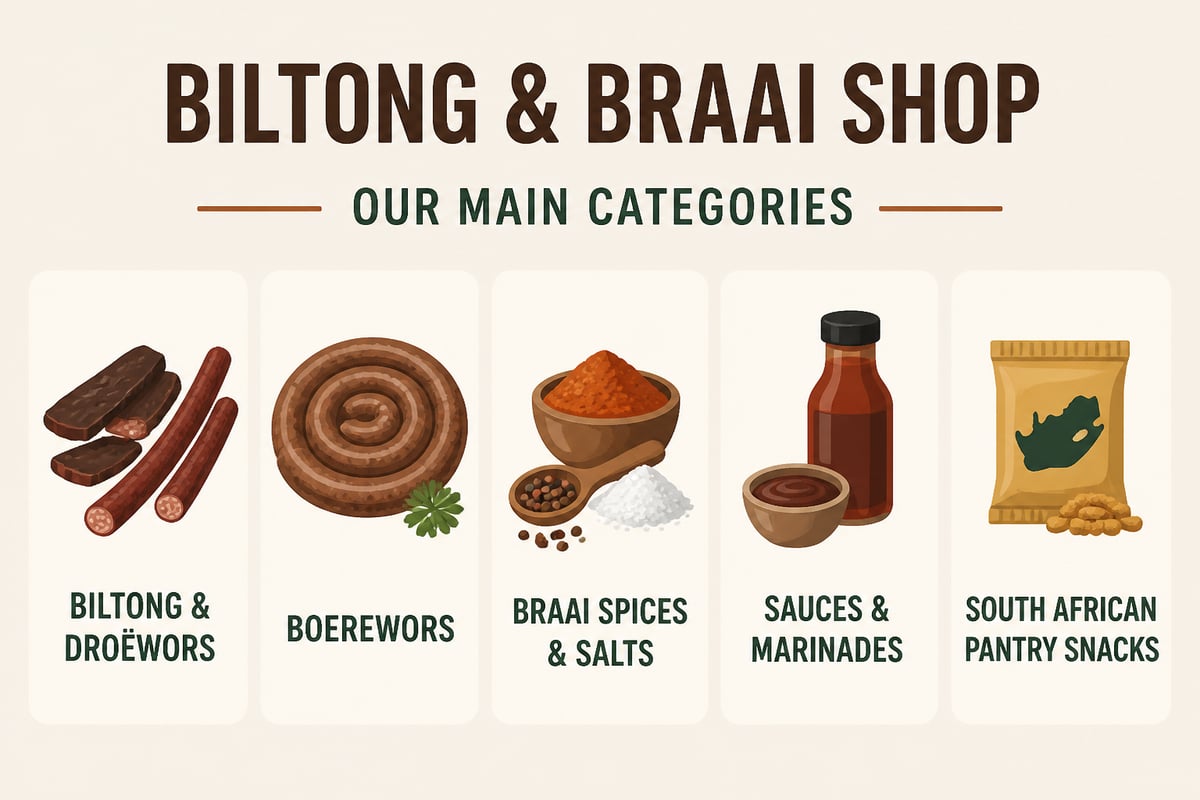
A well-stocked biltong and braai shop carries cured meats, braai-ready meat, spices and sauces, and a selection of South African groceries and snacks.
The core categories are consistent across most stores:
- Biltong: air-dried strips or sticks of beef, game or other meat, cured with vinegar, salt, coriander and pepper.
- Droëwors: a dried sausage, usually beef, that is chewier and more savoury than biltong.
- Boerewors: the coarse, spiced fresh sausage that is central to any braai.
- Braai spices and salts: seasoning blends designed for the open flame.
- Sauces and marinades: peri-peri, chutney-based and smoky basting sauces.
- Pantry and snack items: rusks, chips, sweets and tinned goods that remind people of home.
Local news coverage of independent stores, such as this profile of a biltong and braai business in Warkworth, shows how much these shops matter to their communities. They are often the first place new arrivals find familiar flavours.
Why South Africans in New Zealand Look for Familiar Products
South Africans abroad seek out their own food because flavour is one of the strongest links to home, and supermarket substitutes rarely match the original.
New Zealand has an established South African community, and many people have lived here for years. For them, a braai is a social ritual as much as a cooking method. The meat, the seasoning and even the brand of sauce are tied to memories of family weekends, school fundraisers and holidays by the coast. If you want some background on the community itself, Something From Home has written about South African immigration in New Zealand and how many people are here.
There is also a practical side. Standard supermarket sausages are not boerewors, and a generic steak seasoning does not taste like a braai salt with coriander. Dedicated stores solve this by importing the specific brands people grew up with. That is why a South African shop is more than a convenience for many households. It is a way of keeping traditions intact.
For visitors and newcomers curious about the wider culture, Lonely Planet's overview of what to eat and drink in South Africa explains how braai, biltong and dishes such as braaibroodjie fit into everyday life.
How to Choose Good Biltong
Good biltong is chosen by cut, moisture level, thickness and spice, and the right combination depends entirely on personal taste.
Cut and fat content
Lean cuts such as silverside give dry, firm slices with a clean beef flavour. Fattier cuts add richness and a softer bite, and some people specifically ask for the fat to be left on. Sticks, slices and shavings all use the same cure but suit different habits: sticks for snacking, slices for platters, shavings for sprinkling over salads or eggs.
Moisture and texture
Biltong is typically sold as wet, medium or dry. Wet biltong is darker in the centre and tender. Dry biltong is hard and keeps longer. If you are buying for a household with mixed preferences, medium is the safest choice.
Spice and flavour
Traditional biltong relies on coriander, black pepper, salt and vinegar. Chilli and peri-peri versions are common, and some shops stock garlic or teriyaki styles. Reading the ingredients matters if you are watching sugar or additives.
For a deeper look at the snack, Something From Home has an essential guide to the allure of biltong as a New Zealand favourite, and another page on how to find the best biltong. If you prefer to make your own, the homemade biltong recipe walks through the process step by step.
Braai Essentials: Spices, Sauces and Salts
The braai essentials are a good seasoning salt, a basting or table sauce, and a few spice blends, because meat that is already well made needs only a light touch.
Seasoning is where South African brands stand out. A coarse salt blended with coriander gives that unmistakable braai flavour with very little effort. Marina Braai Salt with Coriander 400g is a good example, and it works equally well on lamb chops, chicken pieces and boerewors. For sauce, Nando's Bushveld Braai Sauce 250ml adds a smoky, mildly sweet finish that suits steak and chicken.
Both of these, and a wide range of other options, can be found in the braai and spice collection at Something From Home, a South African food store in New Zealand with a wide range of South African products.
A simple braai shopping list
- Boerewors, about 200 to 250 grams per adult.
- A second protein such as lamb chops, chicken thighs or steak.
- Braai salt and one basting sauce.
- Fresh rolls or bread for braaibroodjies, plus cheese, tomato and onion.
- Charcoal or wood, firelighters and a clean set of tongs.
- Biltong and droëwors for snacking while the coals settle.
Buying from a Biltong and Braai Shop Online
Buying from a biltong and braai shop online is straightforward when the store ships nationwide, and it is often the only practical option outside the main centres.
New Zealand's South African shops are concentrated in a handful of cities, so many customers live an hour or more from the nearest one. Online ordering closes that gap. Something From Home operates as a South African shop and warehouse in New Zealand, which means orders are packed and sent from local stock rather than waiting on a long international journey.
A few practical points help when ordering:
- Order biltong and braai staples together to reduce courier costs.
- Check the delivery timeframes before a planned event.
- Browse the biltong and braai collection for meat snacks and related items in one place.
- Keep an eye on stock cycles. If an item is out of stock, it may be in the next container, and there is a guide on whether a product is included in the next container from South Africa.

Food Safety at the Braai
Safe braai practice comes down to keeping raw and cooked food apart, cooking meat through, and keeping salads and sides chilled until serving.
Boerewors and chicken need to be cooked thoroughly, and the simplest way to check is to cut one open and confirm there is no pink in the centre. The food handling guidance from the South African food safety organisation recommends separate tongs for raw and cooked meat, and covering prepared dishes so they stay clean and cool. These steps apply just as well in a New Zealand backyard.
A few habits make the difference:
- Use one set of tongs and one plate for raw meat, and another for cooked.
- Keep sauces and salads in the fridge until the meat is nearly ready.
- Do not return cooked meat to the plate that held it raw.
- Store leftover boerewors and braaied meat in the fridge within two hours.
Biltong and droëwors are cured and shelf-stable, which makes them useful for outdoor events where fridge space is limited. Keep them out of direct sun and in a cool, dry spot, ideally in a paper bag so they can breathe.
Beyond the Braai: Snacks, Baking and Home Comforts
A good South African shop supports the whole table, not just the fire, with rusks, baking mixes, sweets and drinks that round out a meal or a tea break.
Rusks are the classic example, and the way people dunk them is a topic of friendly debate, as covered in this piece on what the way you eat a rusk reveals. Baking is another strong category. The baking collection with muffins and other tasty options is useful for anyone recreating a school-fete treat. Desserts such as koeksisters and sticky toffee pudding finish a braai in the traditional way.
Drinks matter too. Coffee, tea and cordial brands from South Africa are part of the shopping list for many households, and the post on sipping Ricoffy, Koffiehuis and Five Roses shows how a simple cup can feel like a return to a familiar kitchen.
Making Your Own: Biltong, Sausages and Potjies
Home production is a popular next step once you are comfortable buying from a biltong and braai shop, because the same suppliers stock the tools and ingredients.
Many South Africans in New Zealand dry their own biltong, and a dedicated dehydrator makes the process predictable.
Sausage making is another craft that rewards patience. For slow cooking over coals, the biltong potjie recipe is an unusual and rewarding dish, and the page on the wax layer on a new potjie pot helps first-time owners prepare their pot correctly.
Gifts and Extras Beyond Food
A South African shop often stocks gifts and lifestyle items too, which is useful when you want to send something personal to a friend or family member.
Beyond the pantry, you will find items such as the Woesmooi genuine leather shopping bag, the Cotton Road pink embossed handbag, and personal care such as Happy Hands Hand Serum Tea Therapy 50ml. If you are building a gift parcel, pairing a snack box with a small self-care item works well. Readers interested in natural skincare may also like the range at Sinusoothe, and those browsing general homeware and lifestyle products can explore Amorite.
Retail technology is changing how people choose clothing and accessories online, with tools such as virtual try-on and size guidance from companies like Lumoo Studio making online shopping more confident across categories.
Finding a South African Shop Near You
The simplest way to find a South African shop near you is to check regional guides, because stores and delivery options differ by city.
Something From Home has published location-focused pages for several areas, including Auckland, Hamilton, Paraparaumu, Rosedale and Browns Bay. There is also a general guide to finding your nearest African shop in New Zealand.
If you are comparing prices, it helps to understand how imports are costed. The page on the truth about SA prices in NZ breaks down why a familiar tin costs what it does, and the overview of the costs of importing goods from South Africa adds useful context.
Start by writing a short braai list covering boerewors, a second meat, a seasoning salt and a sauce, then check what you already have in the pantry. From there, Something From Home can fill the gaps as a South African shop and warehouse in New Zealand, with a wide range of South African products and nationwide delivery. Browse the range online and have everything for your next braai sent straight to your door.