Where to Buy Authentic Biltong in New Zealand: A Guide
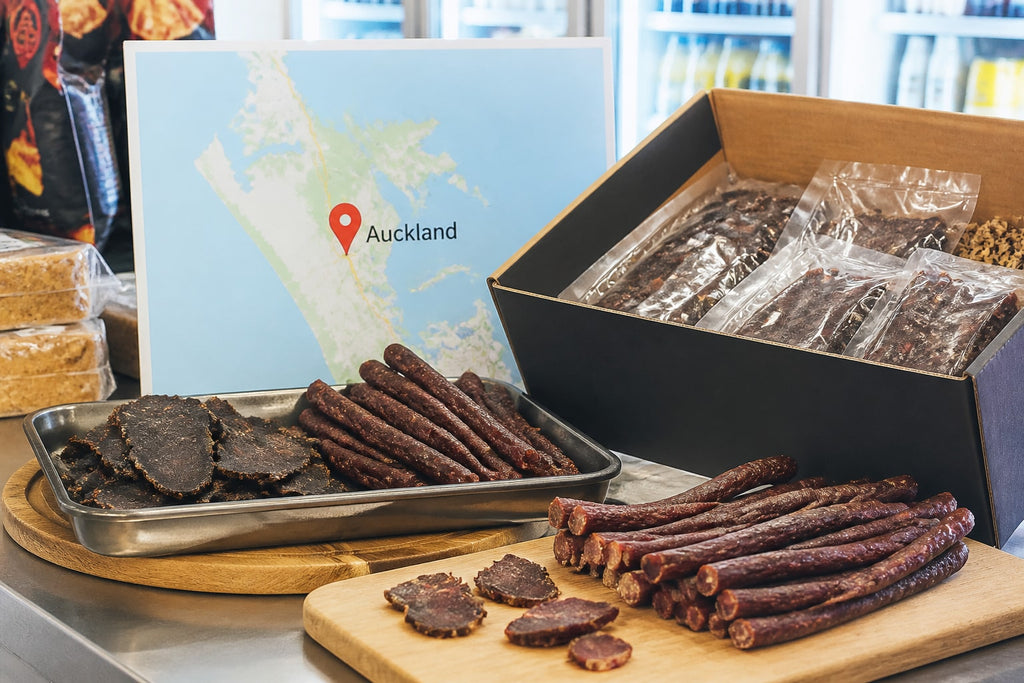
Authentic biltong in New Zealand is available from specialist South African shops, independent biltong makers, farmers' markets and online retailers that deliver nationwide. The best option depends on whether you want traditional beef biltong cut and spiced the South African way, a particular brand from home, or simply a reliable supplier who can post it to your door.
For South Africans living in Aotearoa, biltong is rarely just a snack. It is the thing you reach for at a rugby match, on a long road trip, or around a braai on a Sunday afternoon. This guide explains the main places to buy it, how to judge quality, what New Zealand's food safety rules mean for the product you buy, and what to know if you are thinking of carrying it through the border.
What Makes Biltong Authentic
Authentic biltong is strips of quality beef, cured in vinegar, salt and a spice blend built around coriander, then air-dried until firm but still tender. The coriander is the signature. Whole roasted seeds, lightly crushed, give biltong its distinctive, slightly citrus flavour, and they separate it from American-style jerky, which is usually smoked, marinated in sweet sauces and dried with heat.
A few features distinguish the real thing:
- Air-drying, not smoking. Biltong is dried with moving air at low temperatures, which is why it keeps a deeper beef flavour.
- A simple spice list. Salt, coarse coriander, black pepper, vinegar and sometimes a little brown sugar. Long ingredient lists with flavourings and preservatives suggest a different product.
- Thick cuts. Traditional biltong is cut from whole muscle, usually silverside or topside, and sliced against the grain or in thick strips.
- Fat options. Many South Africans prefer a little fat on the edge, often sold as "fatty" biltong, while "lean" or "dry" cuts suit those who want a firmer bite.
If you want a deeper grounding in the style itself, Something From Home's essential guide to New Zealand's favourite snack covers the flavours and cuts in more detail.
Where to Buy Biltong in New Zealand
You can buy biltong in New Zealand from five main sources: South African specialty shops, dedicated biltong makers, online retailers, farmers' markets and selected butchers or delis. Each suits a different kind of buyer.
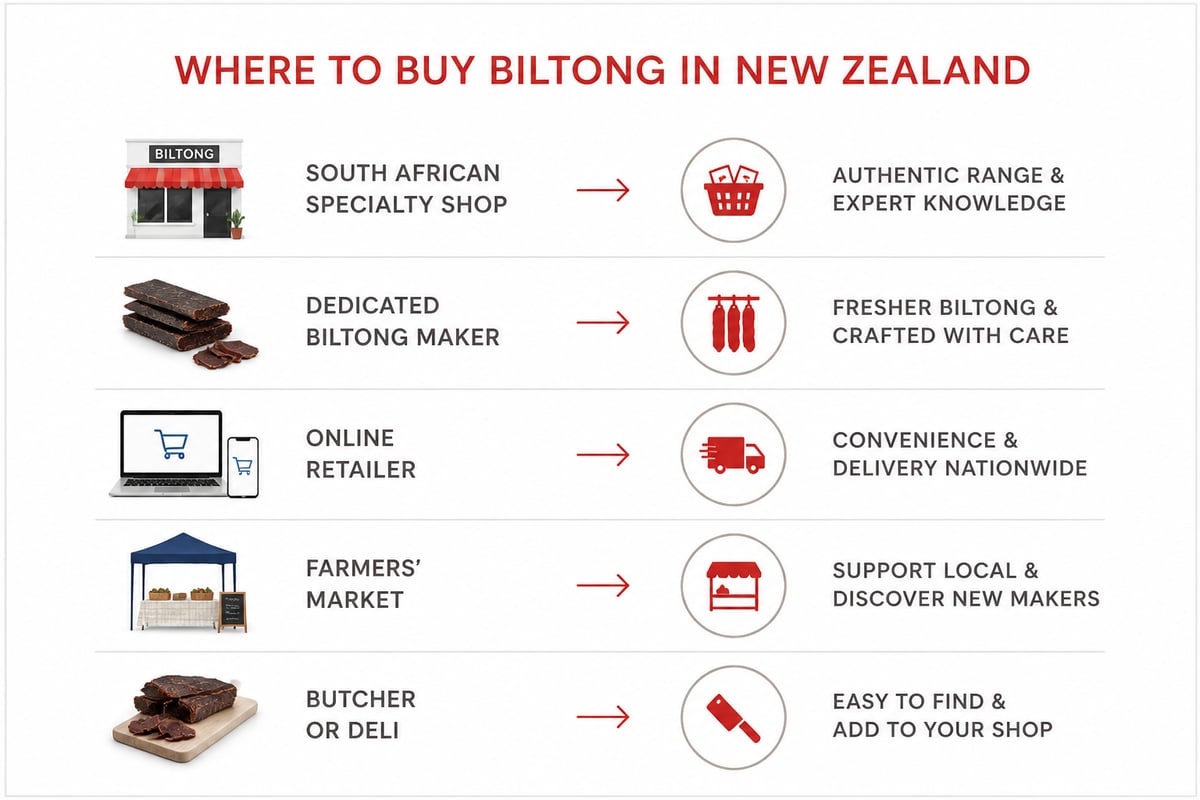
South African Specialty Shops
A South African shop is usually the most dependable choice for authentic biltong, because the stock is chosen by people who grew up eating it. These stores tend to carry several cuts and spice profiles, plus droewors (dried sausage), chilli bites and the other South African snacks that go with them. You also get the familiar brands, which matters to many expats who want the exact flavours they remember.
Something From Home is a South African food store and warehouse in New Zealand with around 2,200 South African products. It stocks authentic South African brands rather than imitations or substitutes, and you can shop in person in Browns Bay, Auckland, or order online for delivery across New Zealand and Australia. For a sense of how the shop approaches the category, the biltong and braai shop overview is a good starting point.
Independent Biltong Makers
Small producers across the country make biltong in batches and sell direct, often through a website, a shopfront or a social media page. Buying from a maker gives you the freshest product and the chance to ask about the cut, the spice mix and the drying time. Quality varies between producers, so check the label details described later in this guide.
Online Retailers
Ordering online is the practical answer if you live outside Auckland, or anywhere without a South African store nearby. Biltong travels well because it is dried and shelf-stable, so courier delivery works comfortably. Something From Home also explains how to order South African biltong online in New Zealand, including what to expect on delivery.
Farmers' Markets, Butchers and Delis
Some markets and independent butchers sell locally made biltong, and it can be a convenient way to try a small quantity before committing to a larger order. Stock is less predictable than at a dedicated shop, so it suits browsing more than planning a braai.
Comparing Your Options
The table below summarises how the main sources compare for a typical buyer.
| Source | Range of cuts | Authentic South African brands | Delivery | Best for |
|---|---|---|---|---|
| South African shop | Wide | Yes | Often online and in store | Familiar flavours and a full snack shelf |
| Independent maker | Narrow to moderate | Not applicable | Varies | Freshest batches and local support |
| Online retailer | Wide | Varies | Nationwide | Buyers outside the main centres |
| Farmers' market | Narrow | Not applicable | No | Trying small quantities |
| Butcher or deli | Narrow | Rarely | No | Quick, occasional purchases |
Biltong New Zealand Buyers Should Know: Food Safety Rules
Biltong made and sold in New Zealand is subject to specific food safety requirements, and understanding them helps you judge a supplier. The New Zealand Ministry for Primary Industries (MPI) classifies biltong as uncooked, air-dried, ready-to-eat meat and a high-risk food, because it is not cooked and may be processed at temperatures that allow harmful microbes to grow. That classification is the reason the rules are strict.
Three requirements stand out for commercial biltong:
- Low water activity. For biltong made for sale, MPI says the finished product must have a water activity below 0.85, which helps prevent harmful bugs from growing or producing toxins.
- Every batch is checked. MPI's business guidance says makers must test water activity for every batch, using a water-activity meter, a percentage weight-loss calculation or laboratory testing.
- Approved meat only. The meat must be beef, lamb or venison from a primary processor with a registered Risk Management Programme and national microbiological monitoring. Micro-abattoirs are excluded.
For you as a buyer, this means a reputable seller should be comfortable explaining where their meat comes from and how they confirm each batch is properly dried. A seller who cannot answer those questions is worth avoiding.
How to Judge Quality Before You Buy
Quality biltong can be assessed by sight, touch and a quick label check, and a few minutes of attention is enough to separate a good product from a disappointing one.
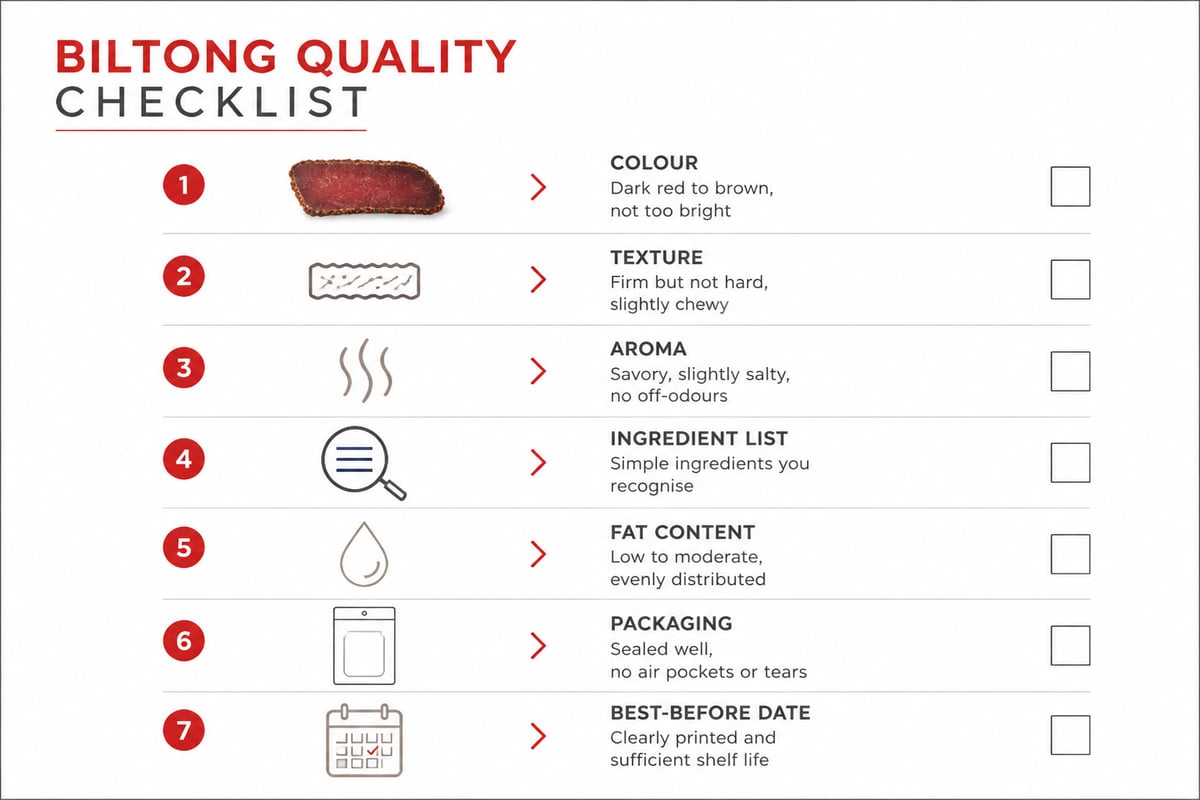
Look for the following:
- Colour. A deep, even reddish-brown is a good sign. Grey patches or an unusually pale colour can indicate poor curing.
- Texture. It should feel firm but yield slightly when bent, without being brittle or rubbery.
- Aroma. Warm coriander, vinegar and beef. Any sour or off smell is a warning.
- Ingredients. Beef, salt, vinegar, coriander, pepper and similar spices. Fewer additives generally means a more traditional product.
- Packaging. Sealed, clearly labelled and dated, with the producer's details.
If you are choosing between thick and thin cuts, remember that thicker biltong holds more moisture and tends to suit those who like a tender chew, while thin slices work well for snacking and sandwiches. Something From Home's guide to the best biltong offers further pointers on matching a style to your taste.
Biltong, Droewors and Other South African Snacks
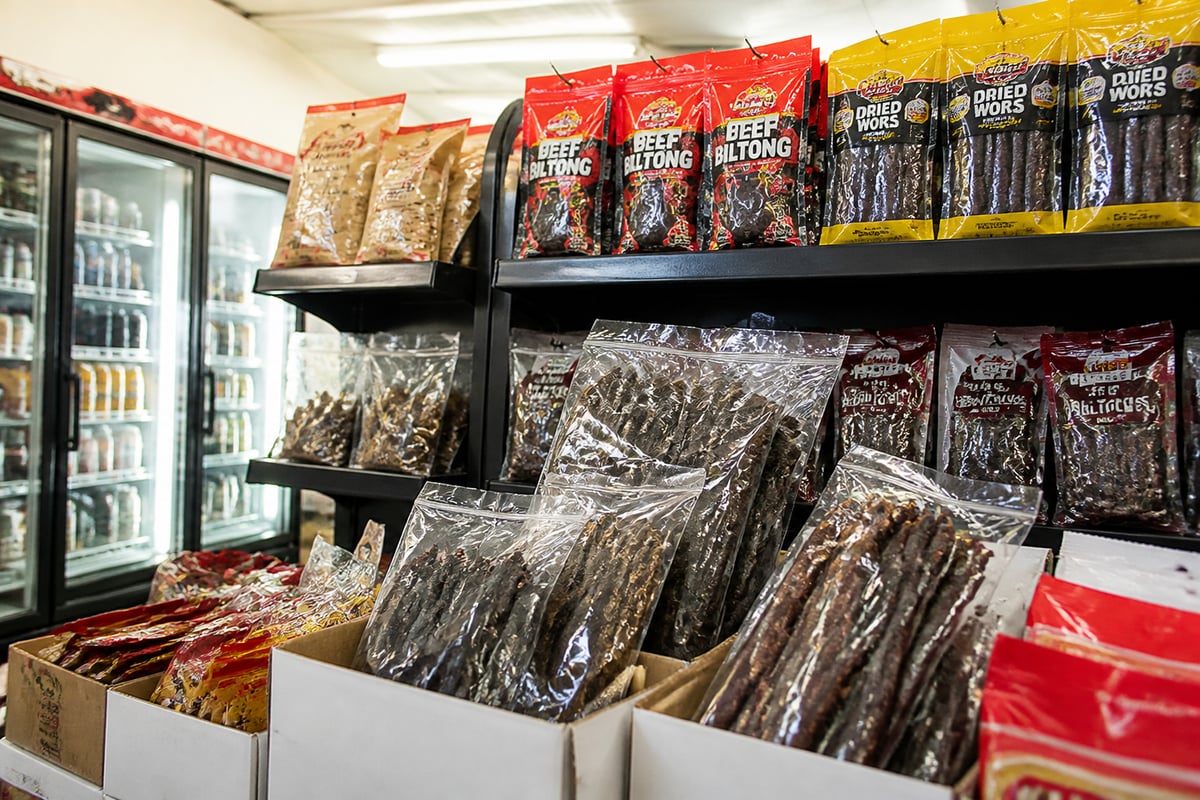
Biltong sits within a much broader tradition of South African snacking, and most buyers find themselves adding a few companions to the order. Droewors, the thin dried sausage, is the obvious partner, and it is a favourite for lunchboxes and long drives. Chilli bites, dried wors sticks and flavoured biltong chips round out the shelf at a typical South African food store.
This is also where food culture comes in. Biltong is tied to the braai, to rugby weekends and to the habit of sharing a bag between friends while the fire gets going. For South Africans abroad, the familiar taste of home is part of staying connected, which is why many seek out their usual brands rather than accepting a generic substitute. The same instinct explains why shoppers pair biltong with rugby-day treats and classic tennis biscuits in the same order.
For New Zealanders new to the category, biltong is a gentle introduction to South African flavours. Start with a classic beef biltong, then try droewors, and you will quickly see why it has built a loyal following here.
Making Biltong at Home
Making biltong at home is a realistic alternative if you enjoy a project and want to control the spice mix. The process is simple in principle: cure the beef in vinegar and spices, hang it in a ventilated space, and wait for it to dry. The equipment is where most beginners need guidance.
A dedicated dryer gives consistent airflow and temperature, which is exactly what homemade biltong needs to dry safely.
One caution applies. The food safety standards described earlier are written for biltong made for sale, but the same principles of thorough drying and clean handling apply at home. Follow a tested recipe, use quality meat and keep the finished product dry and well stored.
Bringing Biltong Into New Zealand
If you are visiting South Africa and hoping to carry biltong home, the rules are strict and worth reading before you pack. MPI requires that all food brought into New Zealand must be declared, including small amounts and cooking ingredients. Meat products face additional import requirements covering safety, labelling and protection against pests and harmful organisms, which MPI sets out in its guidance on importing meat.
In practice, many travellers find the process more trouble than it is worth, particularly when they can buy biltong locally and have it delivered. If you do plan to bring some in, read Something From Home's explanation of whether you can bring biltong into New Zealand and always declare it on your arrival card. Planning a wider South African trip? DestiNATION's travel guides are a useful resource for destinations and logistics.
Tips for Buying Biltong Online in New Zealand
Buying biltong online works best when you plan the order sensibly and check a few details first. These steps keep things simple:
- Decide on cut and spice. Traditional, chilli, peri-peri and garlic are common, and many shops sell sliced or stick formats.
- Choose a quantity. Biltong keeps well when sealed and stored somewhere cool and dry, so ordering a larger bag or a biltong box often makes sense.
- Check the label details. Look for a clear ingredient list, a best-before date and producer information.
- Add a few companions. Droewors, braai spices and favourite snacks save you a second delivery.
- Allow for courier times. Rural areas may take a little longer, so order before you run out.
Something From Home delivers across New Zealand and Australia, so South Africans in both countries can stock up from one place.
Frequently Asked Questions
Is biltong the same as jerky?
No. Biltong is air-dried and cured with vinegar and coriander-led spices, while jerky is typically smoked or heat-dried and often sweetened. The texture, flavour and preparation differ noticeably.
How long does biltong last once opened?
Stored in a cool, dry place and kept away from moisture, opened biltong keeps well for a good while, though flavour is best when eaten reasonably fresh. Follow the best-before date and storage instructions on the pack.
Which meats are permitted for commercial biltong in New Zealand?
MPI specifies beef, lamb or venison from a primary processor with a registered Risk Management Programme. This is a requirement for biltong made for sale, so reputable sellers will be able to tell you about their sourcing.
Can I buy biltong in person in Auckland?
Yes. Something From Home has a shop in Browns Bay, Auckland, where you can browse biltong, droewors and a wide range of South African groceries and snacks in one visit.
Your next step is simple: decide whether you want biltong this week for a braai or in bulk for the freezer, then check the label for a clear ingredient list and a date. When you are ready to order, Something From Home is a South African shop and food store in New Zealand that stocks authentic South African brands, ships across New Zealand and Australia, and makes it easy to shop available now for biltong, droewors and the snacks that go with them.