Muffin Mix Guide: Baking South African Favourites in NZ
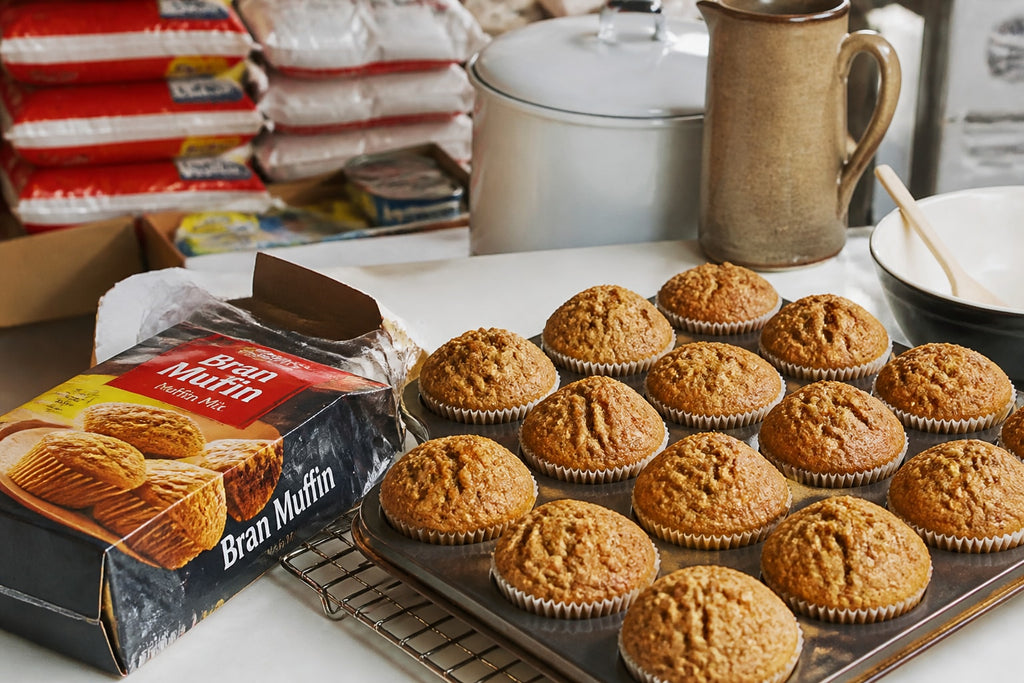
A muffin mix is a pre-blended packet of flour, raising agents, sugar and flavouring that needs only a few fresh ingredients, usually eggs, oil and milk, to become a dozen muffins in about 30 minutes. South African brands such as Snowflake and Ina Paarman's are popular with expats in New Zealand because they deliver the dense, moist crumb and familiar flavours of home baking without sourcing a long list of ingredients.
For many South Africans in Aotearoa, a warm bran muffin with butter is more than a snack. It is tea-time at a grandmother's table, a school fundraiser, or a Saturday morning on the stoep. Packet mixes carry that tradition, and they make it achievable on a weeknight.
What a South African Muffin Mix Contains and How It Differs
A South African muffin mix is built to be forgiving: the dry ingredients are balanced so that adding liquid and eggs produces a reliable, tender muffin on the first attempt. Most packets contain wheat flour, sugar, raising agents, salt, flavouring and sometimes milk powder or bran.
Compared with a scratch recipe, the main advantages are consistency and speed. The manufacturer has already settled the ratio of flour to raising agent, which is the part home bakers most often get wrong.
South African mixes also tend to lean toward flavours that suit tea and coffee culture:
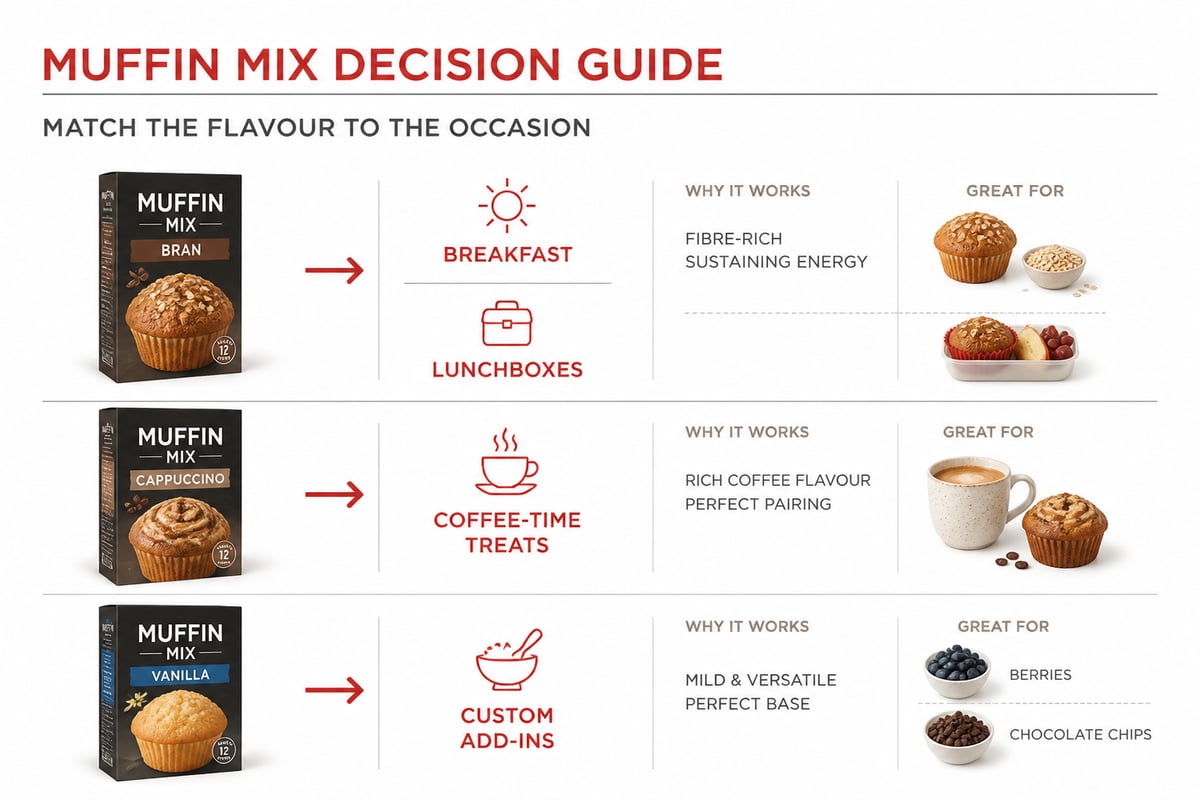
- Bran: high in fibre, often with raisins, and a staple of South African baking
- Cappuccino: a coffee-forward muffin with a sweet, slightly mocha profile
- Vanilla: a plain canvas for blueberries, chocolate chips or grated apple
- Chocomint: a dessert-style option popular with children
Where a standard supermarket mix in New Zealand may be a simple vanilla or blueberry base, these packets reflect regional taste. That is the reason many expats seek them out.
Choosing the Right Muffin Mix for Your Occasion
The right muffin mix depends on who you are feeding and what you plan to add. A bran mix suits breakfast and lunchboxes, while a vanilla base suits experimenting with fruit and toppings.
For classic breakfast baking, Snowflake Bran Muffin Mix 500g is a dependable choice. If you prefer a larger packet with raisins already in the style of a traditional recipe, Ina Paarman's Raisin and Bran Muffin Mix 700g gives you more muffins per box.
For coffee drinkers, Snowflake Cappuccino Muffin Mix 500g delivers a bakery-style result that pairs well with a flat white. For bakers who like to customise, Snowflake Easymix Vanilla Flavoured Muffin Mix 500g is the most flexible option.
All of these, along with a wider baking range, can be found in the Something From Home Snowflake bran muffins and baking collection.
Basic Method for Baking Muffins from a Packet
Packet mixes are straightforward, but a few habits separate a light muffin from a heavy one. Always follow the quantities printed on your specific packet, as they differ between brands. The general method is consistent.
- Heat the oven to the temperature on the packet, typically around 180°C, and line a 12-hole tin with paper cases or grease it well.
- Measure the wet ingredients into a large bowl, usually eggs, oil or melted butter, and milk or water.
- Add the mix and fold with a spatula or wooden spoon.
- Stop mixing as soon as the dry flour disappears. Lumps are acceptable.
- Fill the cases about two-thirds full using a spoon or ice-cream scoop.
- Bake until golden and a skewer comes out clean, then rest in the tin for five minutes before moving to a rack.
The most common mistake is overmixing. Beating the batter develops gluten and produces tough, tunnelled muffins. Fifteen to twenty gentle folds is usually enough.
Egg Safety, Allergens and Label Reading
Muffin batter contains raw egg, so safe handling matters, particularly when baking for children or older relatives. The New Zealand Ministry for Primary Industries advises keeping eggs refrigerated unless they are being used right away, which is worth remembering during warm summer baking sessions.
Baked muffins should be cooked through. MPI also notes that eggs should be cooked until the white is completely firm and the yolk begins to thicken, so avoid tasting raw batter and bake until a skewer is clean.
Allergens deserve equal attention, especially when you are hosting. New Zealand labelling rules require declaration of common allergens, including milk, egg, wheat, soy, sesame, lupin and gluten-containing cereals. These must appear whether the allergen is a main ingredient, part of a compound ingredient, an additive or a processing aid, as MPI explains in its guidance on reading food labels.
A few practical steps help:
- Read the allergen statement on every packet, including any "may contain" advisory
- Check any add-ins such as chocolate chips, nuts or toppings separately
- Wash tins and utensils thoroughly between batches if guests have allergies
For broader background on avoiding cross-contact when you adapt a mix or add toppings, the MPI page on food allergies and intolerances is a practical reference.
Simple Ways to Customise Your Muffin Mix
A packet base is a starting point, and small additions make the result feel homemade. Keep add-ins to roughly one cup in total so the batter still rises properly. Toss fresh or frozen berries in a spoonful of dry mix first, which helps stop them sinking to the bottom of the tin. Grated carrot or apple adds moisture, so you may need slightly less liquid than the packet suggests if the batter looks loose. If you add chopped nuts, check the allergen statement on each ingredient, as nuts are a common concern when baking for guests.
For vanilla bases:
- Fold through blueberries, chopped apple or grated carrot
- Add chocolate chips or a handful of desiccated coconut
- Swirl in a spoonful of Hugo's Mixed Fruit Jam 450g before baking for a jam-centred muffin
For bran bases:
- Stir in grated apple or mashed banana for extra moisture
- Add chopped dates or walnuts for texture
- Top with a sprinkle of oats before baking
For cappuccino bases:
- Add chopped dark chocolate
- Finish with a light dusting of cocoa once cooled
If you enjoy dried fruit in your baking, Safari Mixed Fruit 500g is a convenient pantry staple, and it suits bran muffins especially well.

Why Expats Reach for South African Baking Mixes
Familiar baking products matter because food is one of the strongest links to home. Many South Africans in New Zealand describe the same experience: the local supermarket is excellent, yet the specific brands from childhood are missing from the shelves.
South African baking culture centres on the tea table. Muffins, rusks, scones, flapjacks and buttermilk-style bakes appear at morning teas, church gatherings, school fundraisers and braai-day desserts. Parents who grew up on Snowflake and Ina Paarman products often want to pass those flavours to children who were born in New Zealand.
There is also a practical side. A reliable packet mix means a homesick Sunday can be answered in half an hour, and a plate of warm muffins is an easy way to introduce Kiwi neighbours and colleagues to South African flavours. New Zealanders who are curious about braai, biltong and rusk culture tend to respond warmly to bran muffins and cappuccino muffins, since both sit comfortably alongside a flat white.
Pairing Muffins with Other South African Baking Staples
A muffin mix works well as part of a wider baking cupboard. Once you have the basics, you can rotate through several bakes using similar techniques and ingredients. Scones and flapjacks share the same short mixing time as muffins, so they suit a single baking session where one oven serves all three. Vetkoek is fried rather than baked, which makes it a good choice when the oven is busy. A savoury filling such as mince turns it into a light meal, while apricot jam suits tea time.
| Bake | Suggested mix | Best served with |
|---|---|---|
| Scones | Snowflake Easymix Scone Mix 500g | Jam and cream |
| Flapjacks | Snowflake Easymix Classic Flapjack Mix 500g | Cinnamon sugar or syrup |
| Vetkoek | Eureka Mills Vetkoek Easy Home Mix 1kg | Mince or apricot jam |
| Chocolate cake | Ina Paarman's Chocolate Cake Mix 650g | Whipped cream |
Each of these suits the same pattern: a few fresh ingredients, a short bake and a result that feels homemade. Mixing and matching across a weekend gives you a full tea table without hours in the kitchen.
Storing, Freezing and Reheating Muffins
Muffins keep best when you protect them from air and moisture. Allow them to cool completely before storing, otherwise steam softens the tops and encourages mould.
- Room temperature: store in an airtight container for up to two days
- Fridge: suitable for muffins with cream cheese or fresh fruit fillings, though they may dry slightly
- Freezer: wrap individually and freeze for up to three months
To reheat, warm a frozen muffin in a 160°C oven for about ten minutes or microwave for 20 to 30 seconds. A bran muffin split and buttered while still warm is hard to beat.
Unopened packets should be kept in a cool, dry cupboard away from heat and humidity. Once opened, fold the bag tightly or decant into a sealed container and use within the date on the packet, since raising agents lose strength over time.
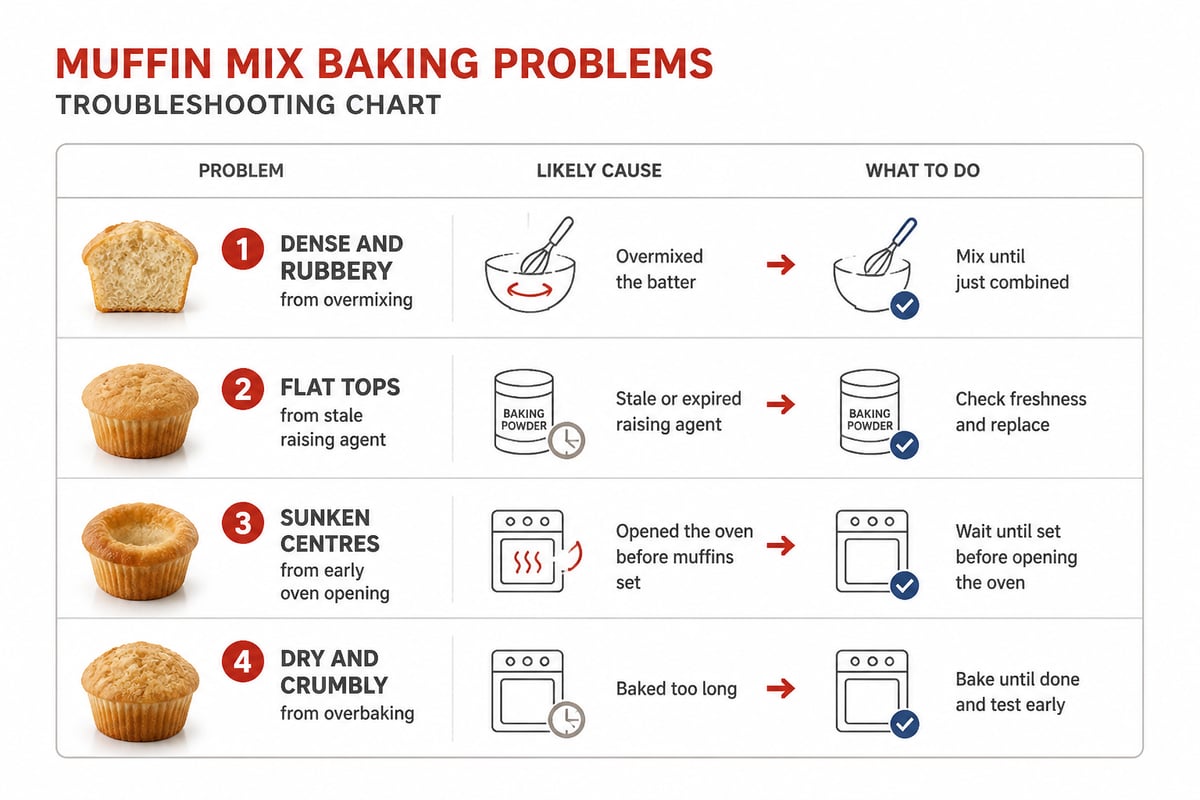
Troubleshooting Common Muffin Problems
Most muffin problems trace back to a small number of causes. Use this quick reference when a batch does not behave.
- Dense or rubbery: the batter was overmixed. Fold gently and stop when just combined.
- Flat tops: the raising agent may be stale, or the oven was not hot enough. Check the packet date and preheat fully.
- Sunken centres: the oven door was opened early or the muffins were underbaked. Wait until at least two thirds of the baking time has passed.
- Dry and crumbly: too long in the oven. Start checking a few minutes before the packet time.
- Stuck to cases: let them cool for a few minutes, and use a light spray of oil inside paper cases for sticky mixes.
Ovens vary, and fan-forced models in New Zealand homes often run hotter than the packet assumes. If your muffins brown too fast, reduce the temperature by 10 to 15°C and bake a little longer.
Buying a Muffin Mix Online in New Zealand
South African muffin mixes are available online and in person without hunting through specialty importers. Something From Home is a South African shop and warehouse in New Zealand that offers online ordering. As a South African food store, it stocks a wide range of South African products and carries authentic brands rather than imitations or substitutes.
That range means you can order muffin mix alongside rusks, braai spices and other pantry staples in a single delivery.
One practical point for planning: buy two or three packets at once. A mix with a long shelf life keeps well, and having a spare means an unexpected visitor or a school bake sale never catches you short.
Start by choosing one flavour from your childhood memory, whether bran, cappuccino or vanilla, and bake a single batch this weekend to see how closely it matches home. Something From Home is a South African food store in New Zealand, so you can shop available now for muffin mixes, rusks and braai favourites and have them delivered to your door.