Droewors: The Ultimate Guide to South African Dried Sausage
Droewors represents one of South Africa's most cherished culinary traditions, a dried sausage snack that has sustained farmers, hunters, and travellers for generations. This distinctive air-dried meat product combines carefully selected cuts, traditional spices, and time-honoured preparation methods to create a flavour profile uniquely South African. For expatriates living in New Zealand, droewors often triggers powerful memories of home, weekend braais, and the distinctive food culture of the Rainbow Nation. Understanding what makes droewors special requires exploring its history, production methods, nutritional profile, and its enduring place in South African food heritage.
The Heritage and History of Droewors
Droewors evolved from the broader tradition of meat preservation developed by early Dutch settlers and indigenous communities in Southern Africa. The name itself derives from Afrikaans, with "droë" meaning dry and "wors" meaning sausage, a straightforward descriptor that perfectly captures the product's essence.
The Slow Food Foundation recognises droewors as part of its Ark of Taste, acknowledging the cultural significance and traditional production methods that distinguish authentic droewors from industrial alternatives. This recognition highlights how droewors represents more than just preserved meat; it embodies generations of knowledge about spice combinations, drying techniques, and food safety practices developed long before modern refrigeration.
Traditional Production Methods
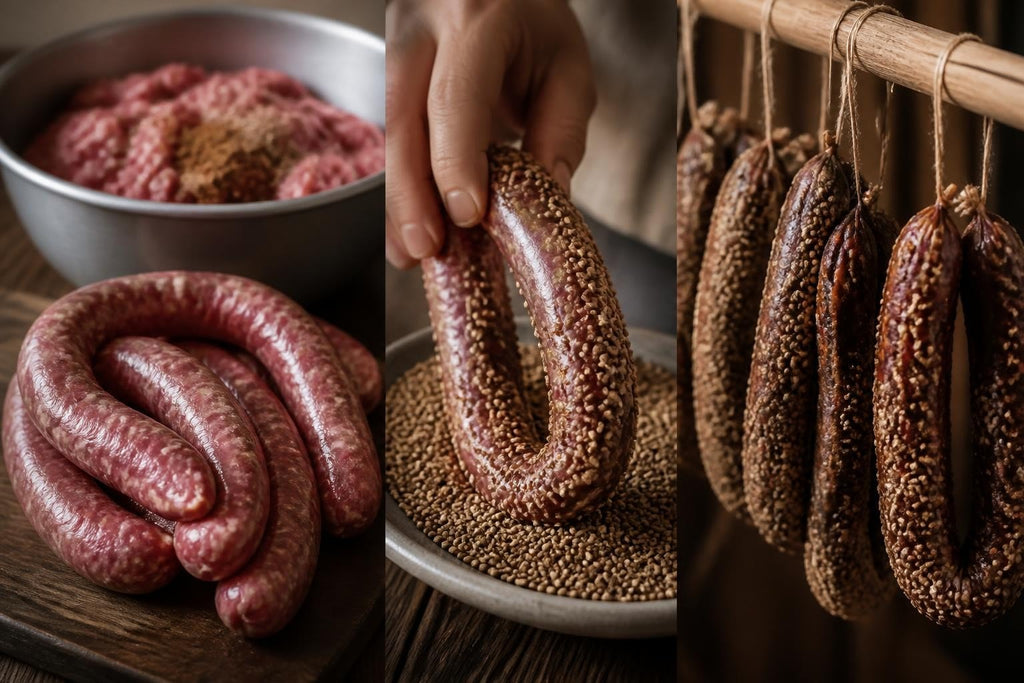
Authentic droewors production follows specific protocols that ensure both safety and flavour. The process begins with selecting premium beef, typically mixed with lamb or game meats to achieve the desired fat content and taste profile. Traditional recipes call for specific spice blends, with coriander seed forming the dominant flavour note.
Key production steps include:
- Grinding meat to precise textures that allow proper moisture release
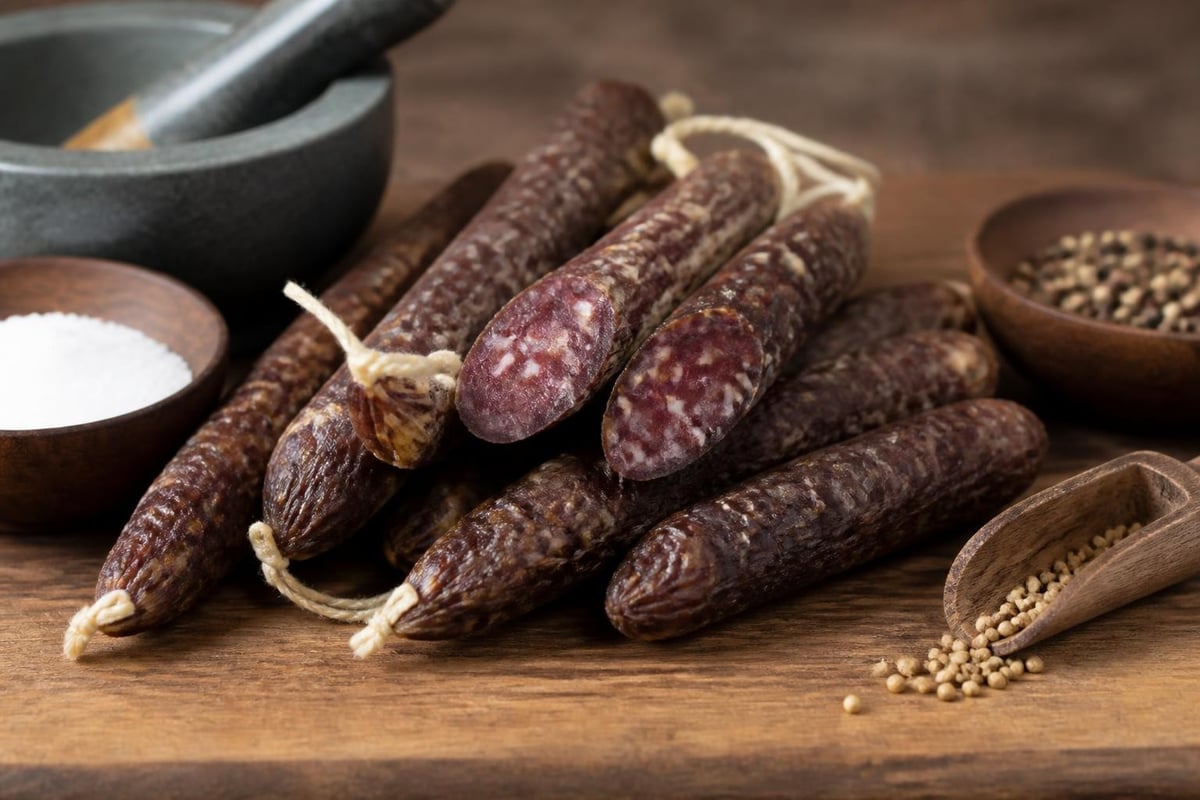
- Mixing spices including coriander, pepper, and salt in traditional ratios
- Adding vinegar and worcestershire sauce for both flavour and preservation
- Stuffing mixture into natural casings, typically sheep intestines
- Coating with additional coriander seeds for protection and flavour
- Air-drying under controlled conditions for several days
The drying process requires careful attention to temperature, humidity, and airflow. Unlike biltong, which consists of solid meat strips, droewors must dry evenly through the minced meat filling whilst maintaining its sausage shape.
Flavour Profile and Culinary Characteristics
Droewors delivers a complex flavour experience that balances savoury meat, aromatic spices, and subtle tang from vinegar. The coriander seed coating provides both textural interest and a distinctive citrus-floral note that complements the rich meat flavours beneath.
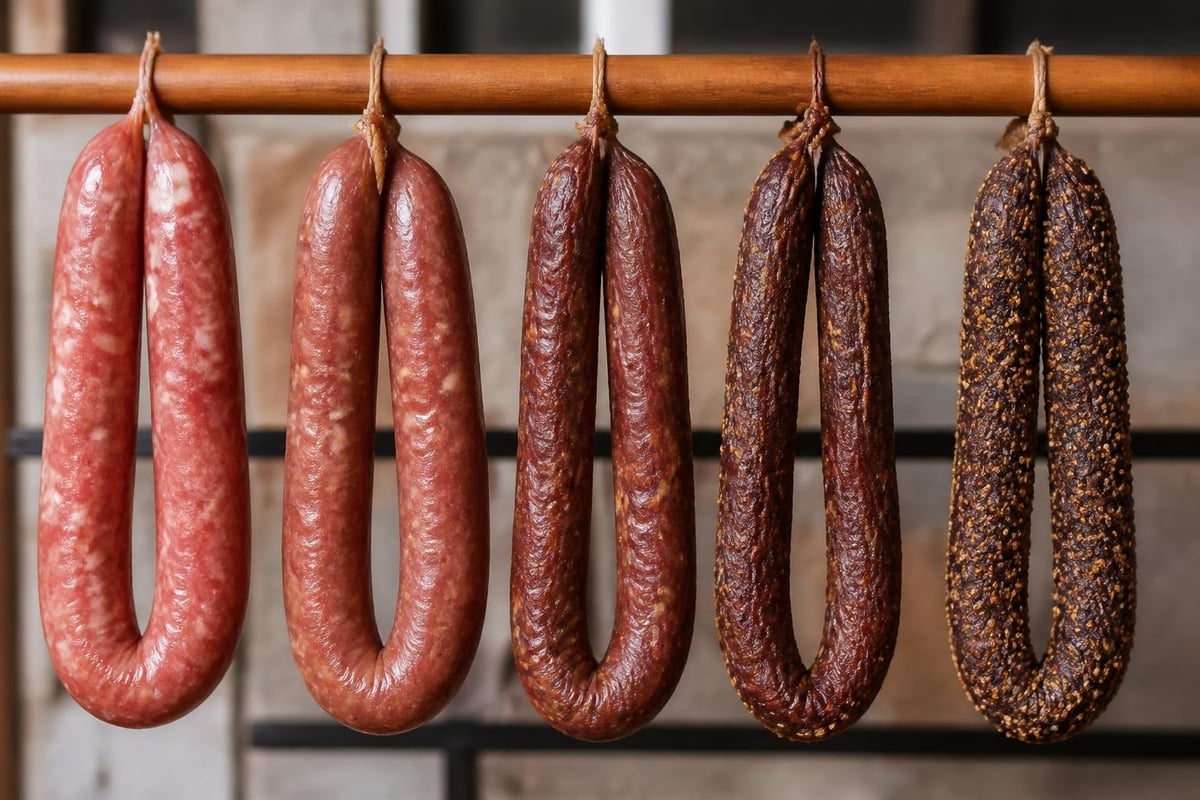
The texture distinguishes droewors from other dried meat products. Proper droewors should snap when bent, revealing a dry but not brittle interior. The meat should appear uniformly dried without wet pockets or excessive hardness. Quality droewors maintains some flexibility, indicating appropriate fat content and careful drying.
Regional Variations and Recipe Differences
South African families guard their droewors recipes with considerable pride, leading to regional and household variations. Some producers favour higher beef content, whilst others incorporate more lamb for distinctive flavour. Game meats including kudu, springbok, and eland feature in specialty versions that appeal to adventurous palates.
| Variation Type | Characteristics | Flavour Notes |
|---|---|---|
| Traditional Beef | 90% beef, 10% lamb fat | Classic, mild spice |
| Game Blend | Kudu or springbok base | Leaner, intense flavour |
| Chilli Droewors | Added cayenne pepper | Spicy, warming heat |
| Garlic Version | Enhanced garlic content | Aromatic, pungent |
The use of game meats in traditional products adds complexity to production and creates premium product categories that command higher prices in speciality markets.
Food Safety and Quality Standards
Producing safe droewors requires understanding the microbiology of fermented and dried meat products. The combination of salt, vinegar, spices, and controlled drying creates an environment inhospitable to pathogenic bacteria, allowing the product to remain shelf-stable without refrigeration.
Research into dried uncooked ready-to-eat meats conducted by New Zealand's Ministry for Primary Industries identifies critical control points for products similar to droewors. Key safety factors include water activity levels, pH control, and proper drying conditions that prevent pathogen survival whilst maintaining product quality.
Essential safety considerations:
- Water activity below 0.85 prevents bacterial growth
- pH reduction through vinegar addition inhibits pathogens
- Salt concentration creates osmotic stress on microorganisms
- Coriander and other spices provide antimicrobial properties
- Controlled drying temperature and humidity prevent spoilage
Commercial producers must validate their processes to ensure consistent safety, whilst home producers should follow established recipes and maintain strict hygiene throughout production. The USDA guidance on fermented and dried products provides comprehensive frameworks that apply to droewors-style products globally.
Nutritional Value and Health Considerations
Droewors provides concentrated protein and essential nutrients in a portable, shelf-stable form. The drying process removes approximately 60-70% of the original moisture, concentrating both nutrients and flavour compounds.
A typical 30-gram serving of traditional beef droewors contains:
- Protein: 12-15 grams
- Fat: 8-12 grams (varies by recipe)
- Carbohydrates: Less than 1 gram
- Sodium: 400-600 milligrams
- Iron: 2-3 milligrams
The high protein content makes droewors popular among athletes and outdoor enthusiasts who require nutrient-dense foods. The fat content, whilst significant, comes primarily from natural animal sources and contributes to satiety and flavour.
Dietary Considerations
Droewors fits naturally into low-carbohydrate and ketogenic dietary patterns due to minimal carbohydrate content. The absence of grains, fillers, and added sugars in traditional recipes appeals to consumers seeking minimally processed protein sources.
However, sodium content requires consideration for individuals monitoring salt intake. The preservation process relies on salt for both flavour and safety, resulting in levels higher than fresh meat products. Consuming droewors as an occasional snack rather than daily staple helps maintain balanced sodium intake.
Cultural Significance in South African Life
Droewors occupies a special place in South African social traditions, particularly around the braai culture that forms a cornerstone of South African identity. Whilst biltong often takes centre stage, droewors appears as an essential accompaniment, providing textural and flavour variety.
The South African dried meat industry encompasses significant economic activity, with biltong and droewors production supporting numerous businesses from small artisanal producers to large commercial operations. This industry maintains traditional practices whilst adapting to modern food safety requirements and export opportunities.
Weekend gatherings frequently feature droewors alongside traditional braai essentials, creating sensory experiences that define South African food culture. The combination of wood smoke, sizzling meat, and the distinctive aroma of droewors creates memories that endure long after emigration.
Droewors in the Expatriate Experience
For South Africans living abroad, accessing authentic droewors becomes a priority that extends beyond simple nutrition. The taste, texture, and aroma connect expatriates to specific memories, family traditions, and cultural identity. This emotional connection explains why South African food stores in New Zealand maintain extensive selections of traditional products.
The challenge of recreating authentic droewors abroad stems from both regulatory requirements and sourcing appropriate ingredients. Import regulations for meat products vary significantly between countries, making commercial importation complex. Home production requires specific casings, spice blends, and controlled drying conditions not readily available in all markets.

Purchasing and Storing Droewors
Quality droewors selection requires attention to visual appearance, aroma, and texture. Fresh droewors should display even colouring throughout, with no signs of moisture beading, mould growth, or rancid odours. The coriander coating should remain intact and aromatic, not dusty or faded.
Selection criteria for quality droewors:
- Firm texture that snaps cleanly when bent
- Even, dark reddish-brown colouring throughout
- Pleasant, spicy aroma without off-notes
- Intact coriander seed coating
- No visible mould or moisture
Proper storage extends droewors shelf life whilst maintaining quality. Despite being shelf-stable, droewors benefits from controlled storage conditions that prevent moisture absorption and oxidation.
Storage Recommendations
| Storage Method | Duration | Conditions |
|---|---|---|
| Room temperature | 2-4 weeks | Cool, dry place in sealed container |
| Refrigeration | 2-3 months | Wrapped tightly to prevent moisture |
| Freezing | 6-12 months | Vacuum sealed or airtight container |
Droewors stored at room temperature requires monitoring for any signs of moisture development or mould growth. Refrigeration slows oxidation and extends shelf life, particularly in humid climates. Freezing preserves droewors for extended periods, though texture may become slightly more brittle upon thawing.
Making Droewors at Home
Enthusiastic home cooks can produce droewors with appropriate equipment and careful attention to traditional methods. The process requires specialisation beyond basic cooking skills, but remains accessible to dedicated practitioners.
Essential equipment includes a meat grinder, sausage stuffer, natural casings, and appropriate drying facilities. The drying environment must provide consistent airflow, moderate temperature, and humidity control to achieve safe, quality results.
Basic Traditional Recipe Framework
Whilst specific recipes vary, traditional droewors follows general proportions and processes that ensure both safety and authentic flavour:
- Meat blend: 80-90% lean beef, 10-20% lamb or pork fat
- Spice ratio: 30-40 grams coriander seed per kilogram of meat
- Salt content: 20-25 grams per kilogram (2-2.5%)
- Vinegar addition: 30-50 millilitres per kilogram
- Additional spices: Black pepper, nutmeg, cloves in small quantities
The mixture requires thorough blending to distribute spices evenly and develop protein bind that holds the sausage together during drying. Stuffing into sheep casings creates the characteristic thin diameter that allows efficient moisture removal.
Drying typically occurs over 4-7 days at temperatures between 18-24°C with good airflow. The exact duration depends on ambient conditions and desired final moisture content. Home producers must maintain vigilance throughout drying to prevent contamination or spoilage.
Droewors Versus Other Dried Meats
Understanding how droewors differs from related products clarifies its unique position in South African food culture. Whilst biltong remains the most famous South African dried meat internationally, droewors offers distinct advantages for certain applications.
Comparison of South African dried meats:
- Biltong: Whole muscle strips, thicker texture, longer chewing time
- Droewors: Minced and spiced sausage, uniform texture, intense spicing
- Boerewors: Fresh sausage requiring cooking, similar spicing to droewors
- Salamis: European-style fermented sausages with different spice profiles
Droewors bridges the gap between biltong's substantial chew and the convenience of sliced salamis. The minced texture provides easier consumption whilst maintaining the concentrated meat flavour that characterises South African dried products.
Finding Authentic Droewors in New Zealand
South Africans residing in New Zealand seeking authentic droewors have several options, though availability varies by region. Specialised South African grocery stores stock imported droewors that meets New Zealand import requirements whilst maintaining traditional flavour profiles.
Something From Home operates as a dedicated South African food store in New Zealand, maintaining extensive inventory including traditional droewors varieties. With more than 2,500 South African products available, the store addresses the specific needs of expatriates seeking familiar tastes from home.
Online ordering provides convenient access regardless of geographic location within New Zealand. This distribution model ensures consistent availability of traditional products including various droewors styles, from mild traditional recipes to spicier contemporary versions.
Quality Considerations for Imported Products
Droewors imported into New Zealand must meet strict biosecurity and food safety regulations. These requirements ensure products arrive in excellent condition whilst preventing introduction of agricultural pests or diseases. Reputable importers maintain compliance with all regulations whilst preserving product authenticity.
Checking product labelling provides information about ingredients, production methods, and best-before dates. Traditional droewors should list recognisable ingredients including beef, spices, vinegar, and salt, without extensive lists of preservatives or additives beyond those naturally occurring in traditional recipes.
Serving and Pairing Suggestions
Droewors serves admirably as a standalone snack, though thoughtful pairings enhance the experience. The intense spicing and concentrated meat flavour complement various beverages and accompaniments.
Traditional serving contexts:
- Road trip and outdoor activity provisions
- Pre-dinner snacks with sundowner drinks
- Braai accompaniments alongside boerewors and sosaties
- Lunchbox additions for sustained energy
- Gift boxes showcasing South African food culture
Beverage pairings depend on personal preference, though South African wines, craft beers, and spirits provide culturally appropriate matches. The coriander and pepper notes in droewors complement hoppy beers particularly well, whilst robust red wines stand up to the intense meat flavours.
Creative Contemporary Uses
Innovative cooks incorporate droewors into contemporary dishes that honour tradition whilst exploring new applications. Chopped droewors adds protein and flavour to salads, grain bowls, and pasta dishes. The concentrated spicing reduces need for additional seasonings whilst providing textural interest.
Droewors crumbled into scrambled eggs creates a satisfying breakfast with distinctly South African character. Pizza toppings, flatbread garnishes, and cheese board components represent additional applications that showcase droewors' versatility beyond traditional snacking contexts.
The Commercial Droewors Industry
South African droewors production encompasses both artisanal producers maintaining traditional methods and commercial operations achieving economies of scale. This diversity ensures product availability across price points whilst preserving authentic recipes and techniques.
Small-batch producers often emphasise specific regional recipes, family traditions, or premium ingredients including game meats. These artisanal products command premium prices but deliver distinctive flavour profiles unavailable from mass-market alternatives.
Commercial producers leverage modern food science and processing technology whilst respecting traditional spice combinations and drying principles. Automated systems ensure consistency batch to batch, critical for retail distribution and export markets.
Export Opportunities and Challenges
International demand for authentic South African foods continues growing as diaspora communities expand globally. However, exporting dried meat products requires navigating complex regulatory frameworks that vary significantly between destination countries.
Countries including New Zealand maintain strict import requirements for meat products, necessitating specific processing certifications, laboratory testing, and documentation. These requirements increase costs but ensure products meet safety standards whilst protecting local agricultural industries.
Successfully navigating export requirements allows South African producers to serve expatriate communities worldwide, maintaining cultural connections through traditional foods. The economic value of these exports supports rural South African communities where many small producers operate.
Droewors represents far more than dried sausage; it embodies centuries of South African culinary tradition, practical preservation knowledge, and cultural identity. Whether enjoyed as a protein-rich snack, braai accompaniment, or nostalgic taste of home, droewors maintains its place as an essential element of South African food heritage. For South Africans in New Zealand missing authentic flavours from home, Something From Home provides access to traditional droewors and thousands of other South African products, delivered throughout New Zealand with the quality and authenticity that honours these cherished food traditions.