How to Cook Potjiekos: South African Pot Stew Guide
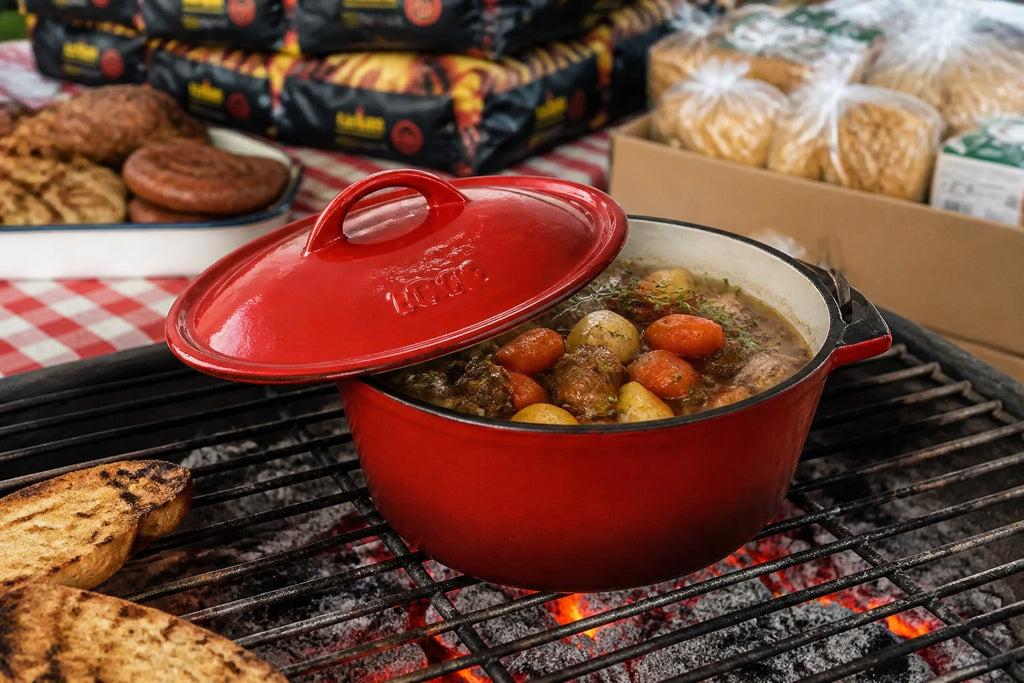
Potjiekos is a South African stew cooked slowly in a cast iron three-legged pot over coals, with meat at the bottom and vegetables layered on top, and the golden rule is that you do not stir it. The name means "small pot food" in Afrikaans, and the dish is as much a social event as a meal: a potjie takes three hours or more, so the cook, the fire and the company all settle in for the afternoon.
For South Africans living in New Zealand, potjiekos is one of the most reliable ways to bring a taste of home to the backyard. Cast iron, a fire and patience are all you need. This guide covers the pot, the fire, the layering method, a reliable recipe and the sides that belong alongside it.
What Makes Potjiekos Different From an Ordinary Stew?
Potjiekos differs from an ordinary stew because it is built in layers and left undisturbed, so the ingredients steam and simmer rather than boil and break down together. In a conventional stew, everything is browned, stirred and cooked in a mixed liquid. In a potjie, the meat sits at the base in a modest amount of liquid, and the vegetables rest above it, cooking gently in the rising steam.
This method has practical effects:
- Distinct textures. Potatoes stay whole, carrots keep some bite and the meat becomes tender without turning to shreds.
- Concentrated flavour. Because the liquid is limited, the sauce reduces into something rich rather than watery.
- Slow, even heat. Thick cast iron holds a steady temperature, which suits long cooking far better than a thin pot.
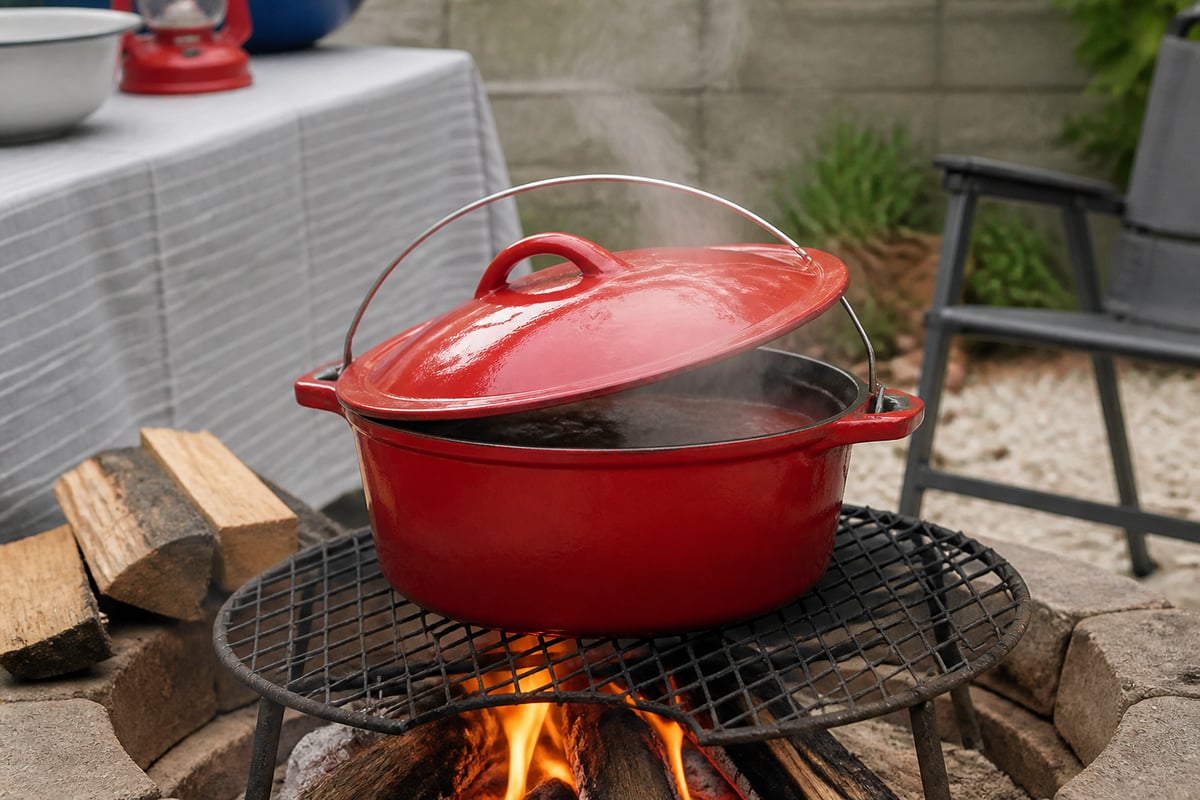
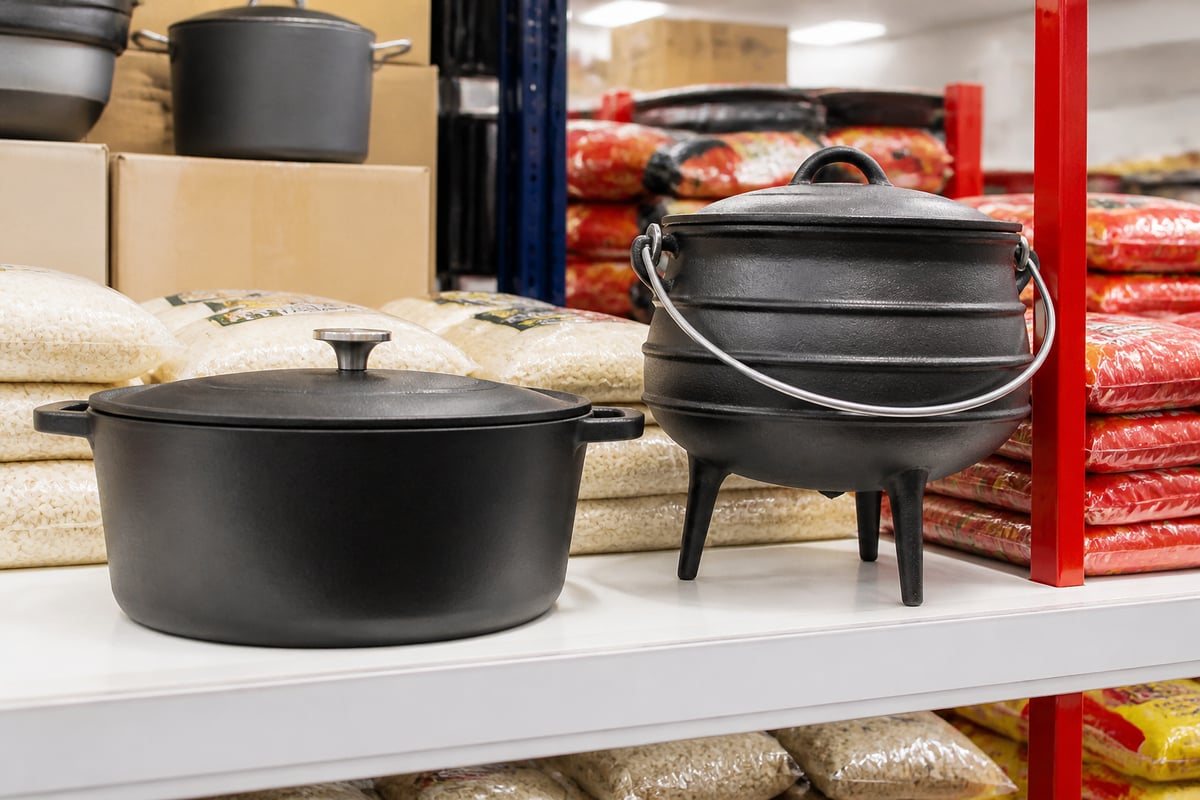
The pot itself is also part of the answer. A traditional potjie is round-bellied with three legs, a wire handle and a tight lid, designed to sit above a bed of coals. The shape keeps heat circulating and lets you adjust the temperature by moving coals around the base rather than adjusting a dial.
Which Potjie Pot Size Do You Need?
The right potjie size depends on how many people you are feeding, and South African potjie pots are numbered, with a size 3 typically suiting a group of about 6 to 8 people. These are general guides rather than fixed rules, as volumes vary between makers, so check the capacity on the specific pot you buy.
| Pot size | Approximate capacity | Typical servings |
|---|---|---|
| Size 1 | 2 to 3 litres | 2 to 3 people |
| Size 2 | 4 to 5 litres | 4 to 5 people |
| Size 3 | 6 to 8 litres | 6 to 8 people |
| Size 4 | 9 to 11 litres | 8 to 12 people |
A number 4 potjie suits larger gatherings, while a size 1 or 2 is sensible for a family dinner or a first attempt. Aim to fill the pot between half and two-thirds full. Overfilling makes layering awkward and leaves no space for steam to circulate.
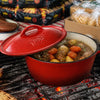
Material matters as well. Raw cast iron needs seasoning and careful drying, while enamelled versions are easier to look after. For a medium-sized option, the LK Flat Potjie Bake Pot 5L in red enamel is made from single-pour cast iron, comes with a lid and carry handle, and works over fire, gas, oven or induction, which is handy if the weather turns. It is available at Something From Home, a South African food store in New Zealand with more than 2,500 South African products.
How Do You Prepare the Fire for Potjiekos?
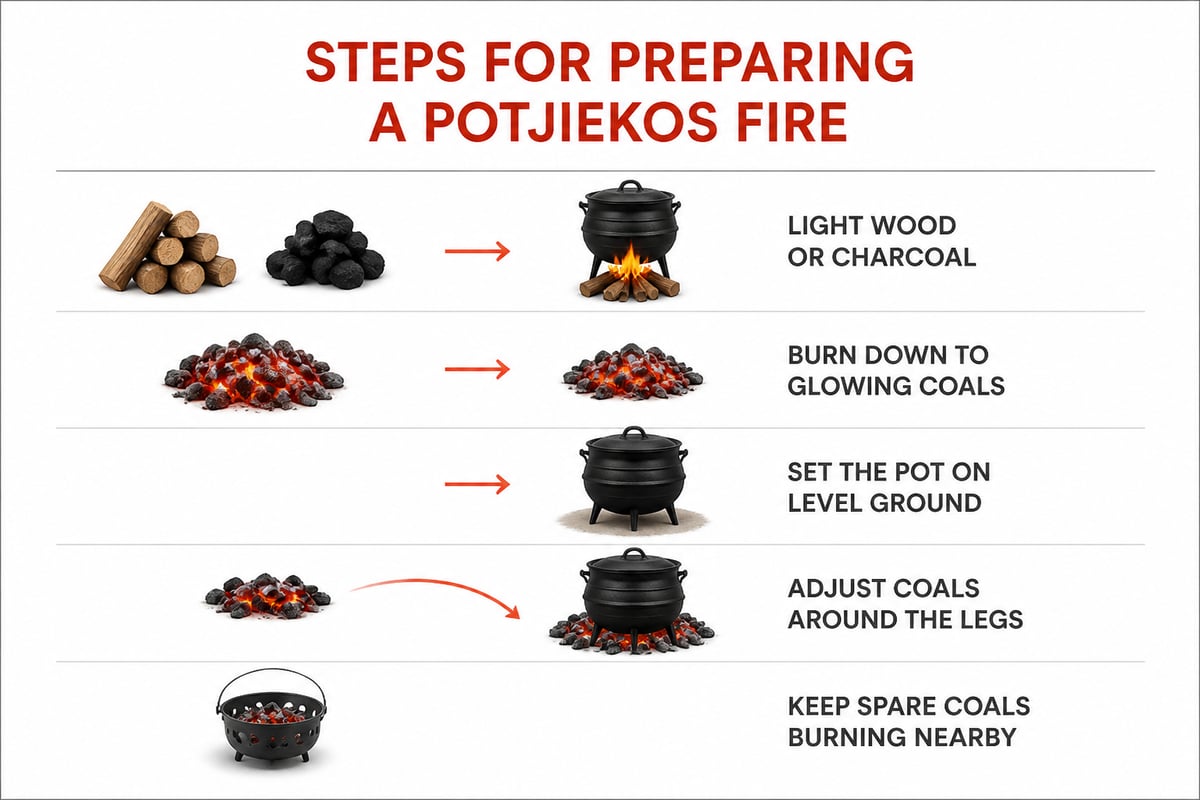
Prepare the fire by burning quality wood or charcoal down to a bed of even, glowing coals before the pot goes on, because flames will scorch the base of the pot while coals give steady, controllable heat. Aim to light the fire 40 to 60 minutes before cooking so the coals are ready when the meat goes in.
The goal is a gentle simmer, not a rolling boil. A few practical points help:
- Start with a larger bed of coals for the initial browning, then reduce.
- Use fewer coals for the long simmer. A handful beneath and around the legs is usually enough.
- Keep a separate pile of coals burning to the side so you can top up without disturbing the pot.
- Shield the pot from wind, which causes uneven heat and wastes coals.
Safety deserves attention too. Set the pot on level, stable ground, keep the cooking area clear of combustible material and turn pot handles inward so they are not knocked. The Nelson Mandela Bay Municipality's fire safety FAQ gives the same advice for clearing combustibles and positioning handles. In New Zealand, also check for any fire restrictions in your area before lighting an open fire, especially through summer.
What Ingredients Go Into a Traditional Potjiekos?
A traditional potjiekos needs bone-in or well-marbled meat, a base of onions, a modest amount of liquid and layers of hardy vegetables, with potatoes usually going in last. Beef is the most common choice, and cuts with some connective tissue, such as chuck, shin or oxtail, give the best results over a long cook.
The core ingredients for a beef potjie are:
- Meat: around 700 to 800 g of beef for a standard family pot
- Aromatics: onions, garlic and a few bay leaves
- Liquid: stock, red wine or beer, kept to a modest amount
- Vegetables: carrots, potatoes, butternut, cabbage or green beans
- Seasoning: salt, pepper and a South African spice blend
Published recipes keep the liquid restrained, which is the point: the vegetables should steam, not swim. The Sekai Gohan potjiekos recipe uses 700 g beef, 400 ml stock, 100 ml red wine and 450 g potatoes, while MadGuru's version calls for 800 g beef, 600 g potatoes and 400 ml of stock or red wine.
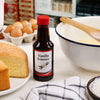
For seasoning, many South African cooks reach for Aromat for its familiar savoury lift, and a spoonful of Bovril stirred into the stock adds depth to a beef pot. For ready-made seasoning, spice mixes and sauces, the potjiekos collection is a good starting point.
How Do You Cook Potjiekos Step by Step?
Cook potjiekos by browning the meat, adding the liquid, then layering vegetables over the top and simmering undisturbed for about three hours, adding the quickest-cooking items last. The method below suits a medium pot serving six.
- Heat the pot over a hot bed of coals and add a little oil.
- Brown the onions, then add the meat in batches until coloured on all sides. Season well.
- Add the liquid (stock, wine or beer) and the bay leaves. Reduce the coals so the pot barely simmers.
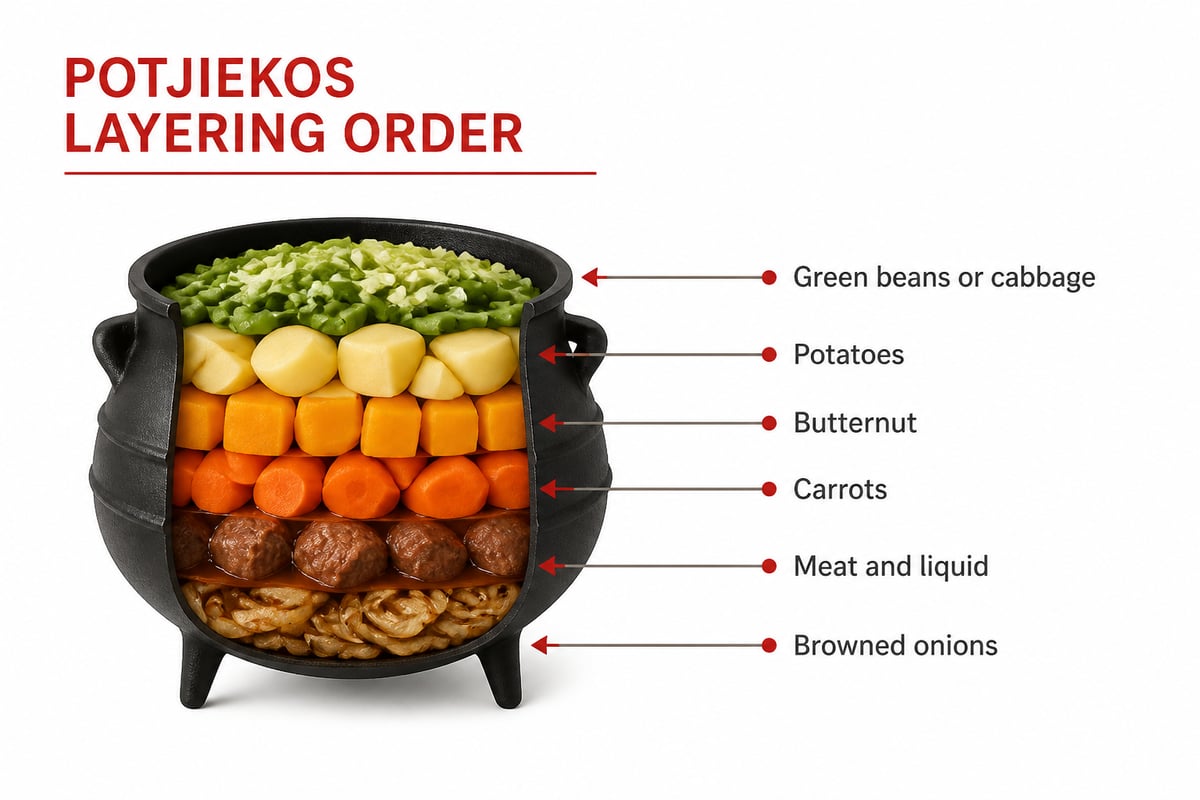
- Layer the vegetables. Start with firmer items such as carrots, then butternut, then potatoes on top. Do not stir.
- Cover and simmer. Keep the lid on and resist the urge to peek too often.
- Check the liquid occasionally. If it has dropped too low, add a splash of hot stock or water.
- Finish with quick vegetables such as green beans or cabbage near the end.
- Rest and serve with the sauce spooned over the top.
How Long Does Potjiekos Take?
Most beef potjiekos recipes need around three hours in total. MadGuru's recipe, for example, staggers the cooking into 1.5 hours, then one hour, then 30 minutes, adding ingredients at each stage. Tougher cuts such as oxtail can take longer, while chicken or lamb may need less.
Why You Should Not Stir
Stirring breaks up the vegetables, muddies the layers and releases starch that thickens the sauce unevenly. The Sekai Gohan recipe also advises not stirring. If you must check on progress, lift the vegetables gently with a spoon and avoid mixing the layers.
What Is the Difference Between a Stew and a Potjie?
A stew is a general term for food cooked slowly in liquid, while a potjie is a specific South African method that uses a cast iron pot, an open fire and layered, unstirred ingredients. You can make a stew on a stovetop in a casserole dish. You cannot truly replicate potjiekos without the pot, the coals and the layering.
The distinction is partly about technique and partly about occasion. A stew is a weeknight meal, usually stirred, usually cooked indoors. Potjiekos is cooked outdoors, usually on weekends, and often becomes the centrepiece of a gathering. The cooking is slow, and so is the afternoon.
Which Potjiekos Variations Are Worth Trying?
South African potjiekos has many regional and personal variations, and the most popular are built around beef, oxtail, lamb, chicken and even seafood. Once you are comfortable with the basic layering technique, the pot can take almost any flavour direction.
- Beef and vegetable: the classic starting point, with carrots, potatoes and butternut.
- Oxtail: rich and gelatinous, needing extra cooking time and often finished with dumplings.
- Beef and beer: beer replaces wine for a malty, slightly bitter depth.
- Lamb with apricots: a Cape-influenced pairing that balances sweetness and spice.
- Chicken and vegetable: lighter and quicker, suited to smaller pots.
- Curry potjie: mince or chicken cooked with Cape Malay spices, popular where the family likes heat.
For curry versions, spice blends such as Gorimas Tandoori Masala can form the base of the seasoning, adjusted to your own heat tolerance.
What Is Potjiekos Eaten With?
Potjiekos is traditionally eaten with pap, rice, crusty bread or garlic bread, which soak up the sauce, and with a simple salad on the side. Because the pot already contains meat and vegetables, the sides are there to carry the gravy.
Common accompaniments include:
- Pap (maize porridge): a staple across South Africa, particularly good with beef and oxtail
- Steamed or yellow rice: a reliable choice for curry versions
- Crusty bread or braaibroodjies: ideal for mopping up the pot
- Chakalaka or a fresh tomato and onion salad: brightness against the richness
- A simple green salad: to balance the plate
A potjie often sits alongside a braai rather than replacing it, with boerewors or chops on the grill while the pot simmers. If you are building the full spread, the braai collection covers sauces, spices and essentials, and Spur sauces are a familiar addition at the table. For a casual afternoon with friends, a bowl of Pakco chillibite mix keeps hands busy while the potjie does its work.
How Can You Care for a Cast Iron Potjie?
Care for a cast iron potjie by washing it with warm water and a soft brush, drying it completely and rubbing a thin film of oil over the inside and outside before storing it. Soap is best avoided on raw cast iron, and the pot must never be left to air dry, as rust forms quickly.
A few habits protect the pot for decades:
- Season new pots before first use by coating them in oil and heating them gently.
- Clean while still warm, scraping any stuck bits with a wooden spoon.
- Dry thoroughly over low heat or in a warm oven.
- Store with the lid slightly ajar or with a paper towel inside to absorb moisture.
Humid coastal conditions make the drying and oiling steps especially important. Enamelled pots are more forgiving, though they should still be protected from sudden temperature shocks and metal utensils that chip the surface.
Why Do South Africans in New Zealand Love Potjiekos?
South Africans in New Zealand love potjiekos because it recreates the pace, smell and social rhythm of a weekend at home, and because the ingredients are easy to find locally with a few South African staples. A long Sunday around the fire, a pot of something rich, and a table of friends is a ritual that transfers well to a backyard in Auckland, Hamilton or Christchurch.
It also appeals to curious New Zealanders. The format suits Kiwi outdoor cooking, from the barbecue to the hāngī, and there is a shared understanding that good food takes time. Sharing a potjie is often a gentle introduction to South African food culture alongside biltong, rusks and braai.
Sourcing is straightforward. Beef, root vegetables and butternut are available at any New Zealand supermarket, while the finishing touches, such as spice mixes, pap, sauces and the pot itself, can come from a specialist South African shop. Something From Home is a South African food store in New Zealand that also sells online, stocking authentic South African brands rather than substitutes. Seasoning and stock products, like Ina Paarman's chicken stock, are the kind of familiar items that make a recipe taste right.
For those wanting kitchen and home essentials beyond the pot, Everyday Goods offers curated home items and kitchen tools that suit a well-equipped outdoor cooking setup.
FAQ
How many people does a number 4 potjie feed?
A number 4 potjie typically feeds 8 to 12 people, depending on appetite and how many sides are served. It holds roughly 9 to 11 litres, though sizes vary slightly between manufacturers, so check the stated capacity.
Can you make potjiekos without a fire?
Yes, some enamelled and flat-based potjie pots work on gas, in an oven or on an induction hob, so you can cook the dish indoors. The flavour is slightly different without wood smoke, but the layering method and slow cooking still apply.
What is the best meat for potjiekos?
Beef chuck, shin and oxtail are the most popular because their connective tissue breaks down into tender meat and a rich sauce over a long cook. Lamb shoulder and bone-in chicken thighs also work well and suit smaller pots.
Before your next weekend, check your pot is clean and oiled, then write a shopping list covering the meat, vegetables and a few South African seasonings. When you need the finishing touches, Something From Home is a South African food store in New Zealand with more than 2,500 South African products, including the LK Flat Potjie Bake Pot 5L if you are still looking for a pot. Shop available now to find the pot, spices and sides for your next potjiekos.